Entrée: United States – Fried Catfish
Food safety reminder: Follow safe food-handling practices and use a food thermometer to verify safe internal cooking temperatures.
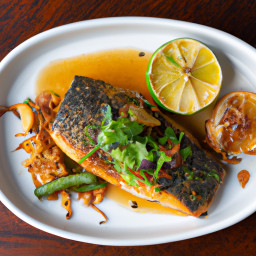
Ingredients
U.S. measurements first, metric equivalents in parentheses. Conversions are approximate; oz means weight ounces, not fluid ounces.
4 catfish fillets (about 6 oz (170 g) each), patted dry
2 cups (480 ml) buttermilk
1 tbsp (15 ml) hot sauce (optional)
1 1 / 2 cups (195 g) fine yellow cornmeal
1 / 2 cup (65 g) all-purpose flour
2 tsp (10 ml) kosher salt, plus more for finishing
1 tsp (5 ml) freshly ground black pepper
1 tsp (5 ml) paprika (smoked or sweet)
1 tsp (5 ml) garlic powder
1 / 2 tsp (2.5 ml) onion powder
1 / 4 tsp (1.25 ml) cayenne pepper (optional)
1 tsp (5 ml) baking powder (optional, for extra crispness)
Neutral oil for frying (peanut, canola, or vegetable), enough for 2 inches (5 cm) depth
Lemon wedges, for serving
Tartar sauce or remoulade, for serving (optional)
Show original ingredient measurements
4 catfish fillets (about 6 oz / 170 g each), patted dry
2 cups (480 ml) buttermilk
1 tbsp (15 ml) hot sauce (optional)
1 1 / 2 cups (195 g) fine yellow cornmeal
1 / 2 cup (65 g) all-purpose flour
2 tsp kosher salt, plus more for finishing
1 tsp freshly ground black pepper
1 tsp paprika (smoked or sweet)
1 tsp garlic powder
1 / 2 tsp onion powder
1 / 4 tsp cayenne pepper (optional)
1 tsp baking powder (optional, for extra crispness)
Neutral oil for frying (peanut, canola, or vegetable), enough for 2 inches (5 cm) depth
Lemon wedges, for serving
Tartar sauce or remoulade, for serving (optional)
Instructions
U.S. measurements first, metric equivalents in parentheses. Conversions are approximate.
In a shallow dish, whisk the buttermilk with the hot sauce. Submerge the catfish fillets and refrigerate for 30–60 minutes.
In a separate bowl, whisk together the cornmeal, flour, salt, black pepper, paprika, garlic powder, onion powder, cayenne, and baking powder.
Set a wire rack over a rimmed baking sheet for draining. Pour oil into a heavy skillet or Dutch oven to a 2-inch (5.08 cm) depth and heat to 350°F (175°C).
Remove fillets from the buttermilk, letting excess drip off. Dredge firmly in the cornmeal mixture, pressing to coat well and shaking off excess. Let coated fillets rest 5 minutes to set the crust.
Fry the fillets in batches without crowding, carefully lowering them into the hot oil. Cook 3–4 minutes per side until deep golden and crisp, and the fish flakes easily or reaches 145°F (63°C) internal temperature.
Transfer fried fillets to the wire rack and immediately sprinkle with a pinch of salt. Allow the oil to return to 350°F (175°C) between batches.
Serve hot with lemon wedges and tartar sauce or remoulade. Pair with coleslaw, hushpuppies, or fries if desired.
Show original instructions
In a shallow dish, whisk the buttermilk with the hot sauce. Submerge the catfish fillets and refrigerate for 30–60 minutes.
In a separate bowl, whisk together the cornmeal, flour, salt, black pepper, paprika, garlic powder, onion powder, cayenne, and baking powder.
Set a wire rack over a rimmed baking sheet for draining. Pour oil into a heavy skillet or Dutch oven to a 2-inch depth and heat to 350°F (175°C).
Remove fillets from the buttermilk, letting excess drip off. Dredge firmly in the cornmeal mixture, pressing to coat well and shaking off excess. Let coated fillets rest 5 minutes to set the crust.
Fry the fillets in batches without crowding, carefully lowering them into the hot oil. Cook 3–4 minutes per side until deep golden and crisp, and the fish flakes easily or reaches 145°F (63°C) internal temperature.
Transfer fried fillets to the wire rack and immediately sprinkle with a pinch of salt. Allow the oil to return to 350°F (175°C) between batches.
Serve hot with lemon wedges and tartar sauce or remoulade. Pair with coleslaw, hushpuppies, or fries if desired.
Per serving | Servings: 4
Generated: 2026-11-05T19:34:39+00:00
*Values are estimates based on USDA data and mathematical calculations. Actual values may vary. Where data are unavailable, those contributions are excluded. Calories, Carbohydrates, Protein, Fat, Saturated fat, Cholesterol, Fiber, Sugar, Sodium, Potassium, Calcium, Iron, Vitamin A and Vitamin C are known subtotals. Missing contributions are unknown, not zero.