Entree: Japan – Okinawa – 沖縄そば ➤ Okinawa soba (Thick wheat noodle soup from Okinawa served in a clear pork-and-katsuobushi broth with braised pork)
Food safety reminder: Follow safe food-handling practices and use a food thermometer to verify safe internal cooking temperatures.
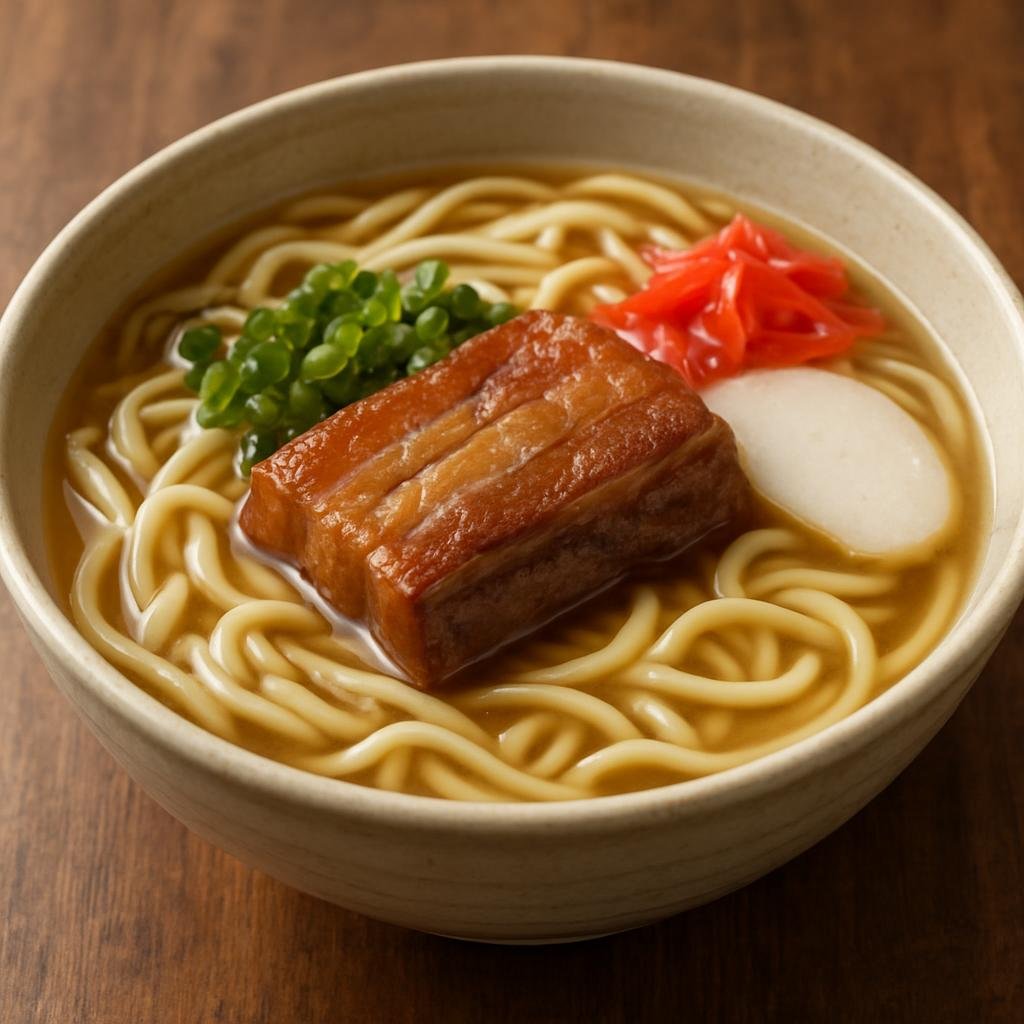
Serving Size: 4
Approximate Time
Prep
30 min
Cook
1 hr 50 min
Total
2 hrs 20 min
Ingredients
U.S. measurements first, metric equivalents in parentheses. Conversions are approximate; oz means weight ounces, not fluid ounces.
- 12 oz (340 g) fresh Okinawa soba noodles or thick wheat noodles
- 1 lb (450 g) pork belly, skin-on, cut into 1–1.5 inch (2.5–4 cm) pieces
- 1 lb (454 g) pork bones (neck or marrow bones) for stock
- 1 piece (about 0.35 oz (10 g)) kombu (dried kelp), 4 x 4 in (10.2 cm) (10 x 3.94 in (10 cm))
- 1 oz (30 g) katsuobushi (dried bonito flakes)
- 6 cups (1.4 L) cold water
- 2 tbsp (30 ml) soy sauce
- 1 tbsp (15 ml) mirin
- 2 tbsp (30 ml) awamori or sake (substitute dry sake if unavailable)
- 2 tbsp (30 g) brown sugar
- 1 tsp (5 g) salt, more to taste
- 4 scallions (green onions), thinly sliced, about 2 oz (60 g)
- Pickled red ginger (benishoga) for garnish, to taste
- Sliced fish cake (kamaboko) or sliced steamed fish cake, optional, about 4 slices
- 1 tbsp (15 ml) vegetable oil
Show original ingredient measurements
- 12 oz (340 g) fresh Okinawa soba noodles or thick wheat noodles
- 1 lb (450 g) pork belly, skin-on, cut into 1–1.5 inch (2.5–4 cm) pieces
- 1 lb (454 g) pork bones (neck or marrow bones) for stock
- 1 piece (about 10 g) kombu (dried kelp), 4 x 4 in (10 x 10 cm)
- 1 oz (30 g) katsuobushi (dried bonito flakes)
- 6 cups (1.4 L) cold water
- 2 tbsp (30 ml) soy sauce
- 1 tbsp (15 ml) mirin
- 2 tbsp (30 ml) awamori or sake (substitute dry sake if unavailable)
- 2 tbsp (30 g) brown sugar
- 1 tsp (5 g) salt, more to taste
- 4 scallions (green onions), thinly sliced, about 2 oz (60 g)
- Pickled red ginger (benishoga) for garnish, to taste
- Sliced fish cake (kamaboko) or sliced steamed fish cake, optional, about 4 slices
- 1 tbsp (15 ml) vegetable oil
Instructions
1. Blanch the pork belly and pork bones: place both in a pot, cover with cold water, bring to a boil 3–4 minutes, then drain and rinse to remove impurities. Clean the pot.
2. Make the pork stock: return blanched bones to the pot with 6 cups (1.4 L) cold water. Bring to a gentle simmer, skimming foam occasionally, and simmer uncovered for 1.5–2 hours until flavorful. Reduce heat to low while braising pork belly in next step.
3. Braise the pork belly (rafute): in a separate saucepan, combine pork belly pieces, 2 tbsp (30 ml) awamori or sake, 2 tbsp (30 g) brown sugar, 2 tbsp (30 ml) soy sauce, and enough water to barely cover the pork. Simmer gently, covered, for 1–1.5 hours until pork is very tender. Remove pork and keep braising liquid; reserve pork for serving and skimming fat.
4. Finish the stock with kombu and katsuobushi: with the pork bone stock at a low simmer, add kombu and simmer 10–15 minutes (do not boil). Remove kombu, then add katsuobushi, steep off heat 5–10 minutes, then strain through a fine sieve or cheesecloth into a clean pot. Discard solids.
5. Season the strained broth with 2 tbsp (30 ml) soy sauce, 1 tbsp (15 ml) mirin, and 1 tsp (5 g) salt. Adjust to taste; keep warm over low heat.
6. Cook the noodles according to package instructions: typically boil fresh soba 2–4 minutes until tender. Drain and divide among 4 bowls.
7. Reheat braised pork briefly in a little of its braising liquid or the soup broth. Place a few pieces of pork belly on each bowl of noodles, ladle the hot pork-and-katsuobushi broth over the noodles, and top with sliced scallions, a few slices of kamaboko if using, and pickled red ginger to taste.
8. Serve immediately while hot.
Estimated Nutritional Information*
Per serving | Servings: 4
Calories: 1352 kcal
Carbohydrates: 60.1 g
Protein: 41.3 g
Fat: 104.3 g
Sodium: 1392 mg
Generated: 2026-11-06T05:37:51+00:00
*Values are estimates based on USDA data and mathematical calculations. Actual values may vary. Where data are unavailable, those contributions are excluded. Calories, Carbohydrates, Protein, Fat and Sodium are known subtotals. Missing contributions are unknown, not zero.