Entree: Russia – Southern Russia – хинкали ➤ khinkali (Juicy hand-folded boiled dumplings filled with spiced ground meat and broth)
Food safety reminder: Follow safe food-handling practices and use a food thermometer to verify safe internal cooking temperatures.
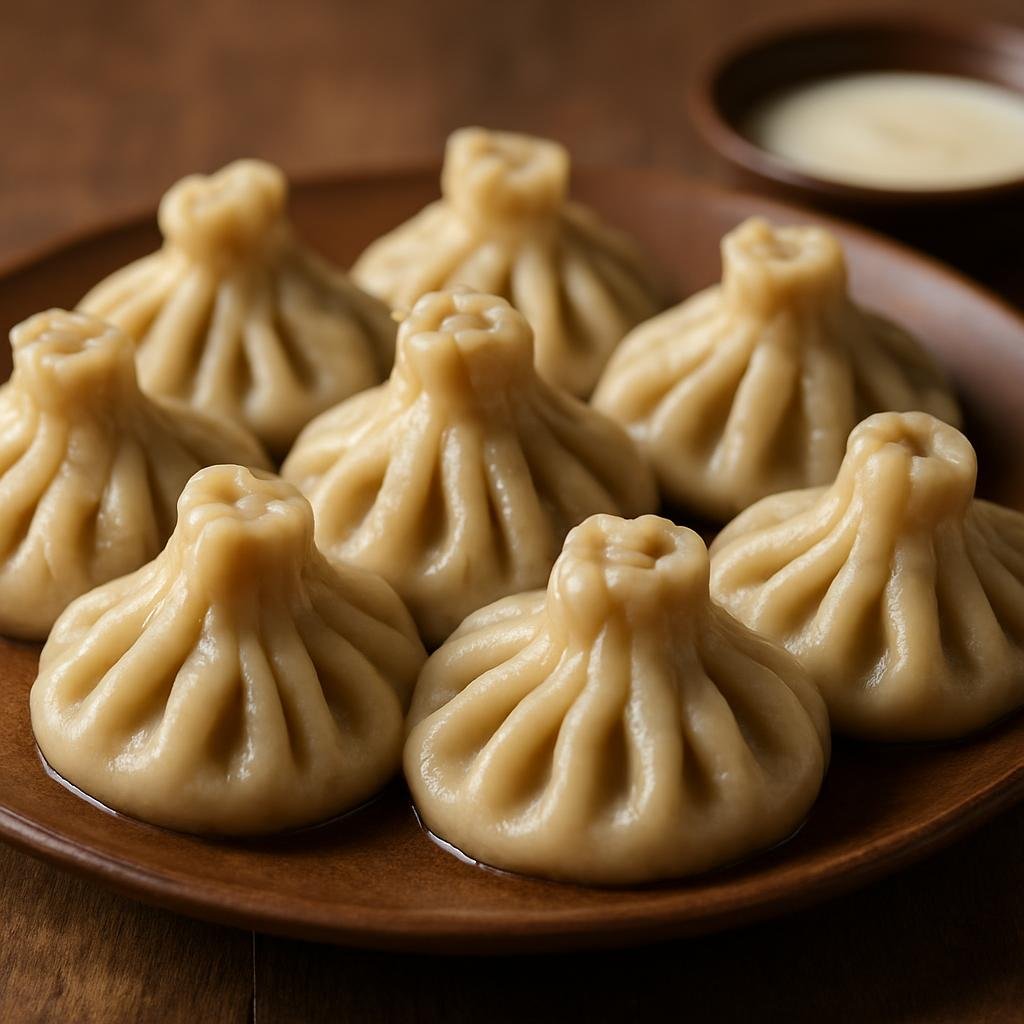
Serving Size: 4
Approximate Time
Prep
35 min
Cook
12 min
Additional
30 min
Total
50 min
Ingredients
U.S. measurements first, metric equivalents in parentheses. Conversions are approximate; oz means weight ounces, not fluid ounces.
- 4 cups (500 g) all-purpose flour, plus more for dusting
- 1 cup (240 ml) warm water
- 1 large egg (optional for richer dough), about 1 3/4 oz (50 g)
- 1 tsp (6 g) fine salt for dough
- 1 lb (450 g) ground beef
- 8 oz (225 g) ground pork or lamb
- 1 large onion, very finely chopped — about 6 oz (170 g)
- 1/3 cup (80 ml) cold water or chilled beef broth (to create juicy filling)
- 2 tsp (10 g) coarse salt, plus more to taste
- 2 tsp (4 g) ground black pepper, plus extra for serving
- 1 tsp (2 g) ground coriander (optional)
- 2 tbsp (8 g) fresh cilantro or parsley, finely chopped (optional)
- 2 cloves garlic, minced (optional)
- 2 tbsp (30 ml) vegetable oil (for dough or to oil pot)
- Water for boiling and 1 tbsp (15 g) salt for the boiling water
Show original ingredient measurements
- 4 cups (500 g) all-purpose flour, plus more for dusting
- 1 cup (240 ml) warm water
- 1 large egg (optional for richer dough), about 50 g
- 1 tsp (6 g) fine salt for dough
- 1 lb (450 g) ground beef
- 8 oz (225 g) ground pork or lamb
- 1 large onion, very finely chopped — about 6 oz (170 g)
- 1/3 cup (80 ml) cold water or chilled beef broth (to create juicy filling)
- 2 tsp (10 g) coarse salt, plus more to taste
- 2 tsp (4 g) ground black pepper, plus extra for serving
- 1 tsp (2 g) ground coriander (optional)
- 2 tbsp (8 g) fresh cilantro or parsley, finely chopped (optional)
- 2 cloves garlic, minced (optional)
- 2 tbsp (30 ml) vegetable oil (for dough or to oil pot)
- Water for boiling and 1 tbsp (15 g) salt for the boiling water
Instructions
U.S. measurements first, metric equivalents in parentheses. Conversions are approximate.
1. To make the dough, place the flour and 1 tsp (5 ml) salt in a bowl. Mix the egg (if using) with the warm water, then gradually add to the flour, stirring until a shaggy dough forms. Knead on a lightly floured surface until smooth and elastic, about 8–10 minutes. Cover and let rest at room temperature for 30 minutes.
2. Meanwhile prepare the filling: combine the ground beef and ground pork or lamb with the finely chopped onion, cold water or chilled broth, 2 tsp (10 ml) salt, black pepper, ground coriander, minced garlic, and chopped herbs if using. Mix thoroughly with your hands until the mixture becomes slightly sticky and emulsified; this helps create the characteristic juicy interior.
3. Divide the rested dough into two pieces. Roll one piece into a log and cut into 12 equal portions (for about 12 khinkali). Keep dough pieces covered. Roll each portion into a thin circle about 4–5 inches (10–12 cm) in diameter.
4. Place about 2 tbsp (30–40 g) of filling in the center of each dough round. Gather the edges and pleat by pinching and folding to form a topknot, creating 18–20 pleats and sealing the dumpling firmly so no liquid escapes.
5. Bring a large pot of salted water to a rolling boil. Add a splash of oil to prevent sticking. Cook khinkali in batches; gently lower dumplings into boiling water and stir once to prevent sticking. When they float, cook for an additional 8–12 minutes until dough is cooked through and filling is hot.
6. Remove with a slotted spoon and place on a platter. Serve hot, sprinkled generously with cracked black pepper. Eat khinkali by holding the topknot, biting a small hole to sip the hot broth, then consuming the rest; the topknot is traditionally left uneaten.
Show original instructions
1. To make the dough, place the flour and 1 tsp salt in a bowl. Mix the egg (if using) with the warm water, then gradually add to the flour, stirring until a shaggy dough forms. Knead on a lightly floured surface until smooth and elastic, about 8–10 minutes. Cover and let rest at room temperature for 30 minutes.
2. Meanwhile prepare the filling: combine the ground beef and ground pork or lamb with the finely chopped onion, cold water or chilled broth, 2 tsp salt, black pepper, ground coriander, minced garlic, and chopped herbs if using. Mix thoroughly with your hands until the mixture becomes slightly sticky and emulsified; this helps create the characteristic juicy interior.
3. Divide the rested dough into two pieces. Roll one piece into a log and cut into 12 equal portions (for about 12 khinkali). Keep dough pieces covered. Roll each portion into a thin circle about 4–5 inches (10–12 cm) in diameter.
4. Place about 2 tbsp (30–40 g) of filling in the center of each dough round. Gather the edges and pleat by pinching and folding to form a topknot, creating 18–20 pleats and sealing the dumpling firmly so no liquid escapes.
5. Bring a large pot of salted water to a rolling boil. Add a splash of oil to prevent sticking. Cook khinkali in batches; gently lower dumplings into boiling water and stir once to prevent sticking. When they float, cook for an additional 8–12 minutes until dough is cooked through and filling is hot.
6. Remove with a slotted spoon and place on a platter. Serve hot, sprinkled generously with cracked black pepper. Eat khinkali by holding the topknot, biting a small hole to sip the hot broth, then consuming the rest; the topknot is traditionally left uneaten.
Estimated Nutritional Information*
Per serving | Servings: 4
Calories: 946 kcal
Carbohydrates: 100.9 g
Protein: 45.7 g
Fat: 38.2 g
Saturated fat: 12.5 g
Cholesterol: 164 mg
Fiber: 4.6 g
Sodium: 1683 mg
Potassium: 743 mg
Calcium: 76 mg
Iron: 9.21 mg
Vitamin A: 33 µg RAE
Vitamin C: 4.7 mg
Nutrition estimated: November 5, 2026
*Values are estimates based on USDA data and mathematical calculations. Actual values may vary. Where data are unavailable, those contributions are excluded. Sodium is a known subtotal. Missing contributions are unknown, not zero.