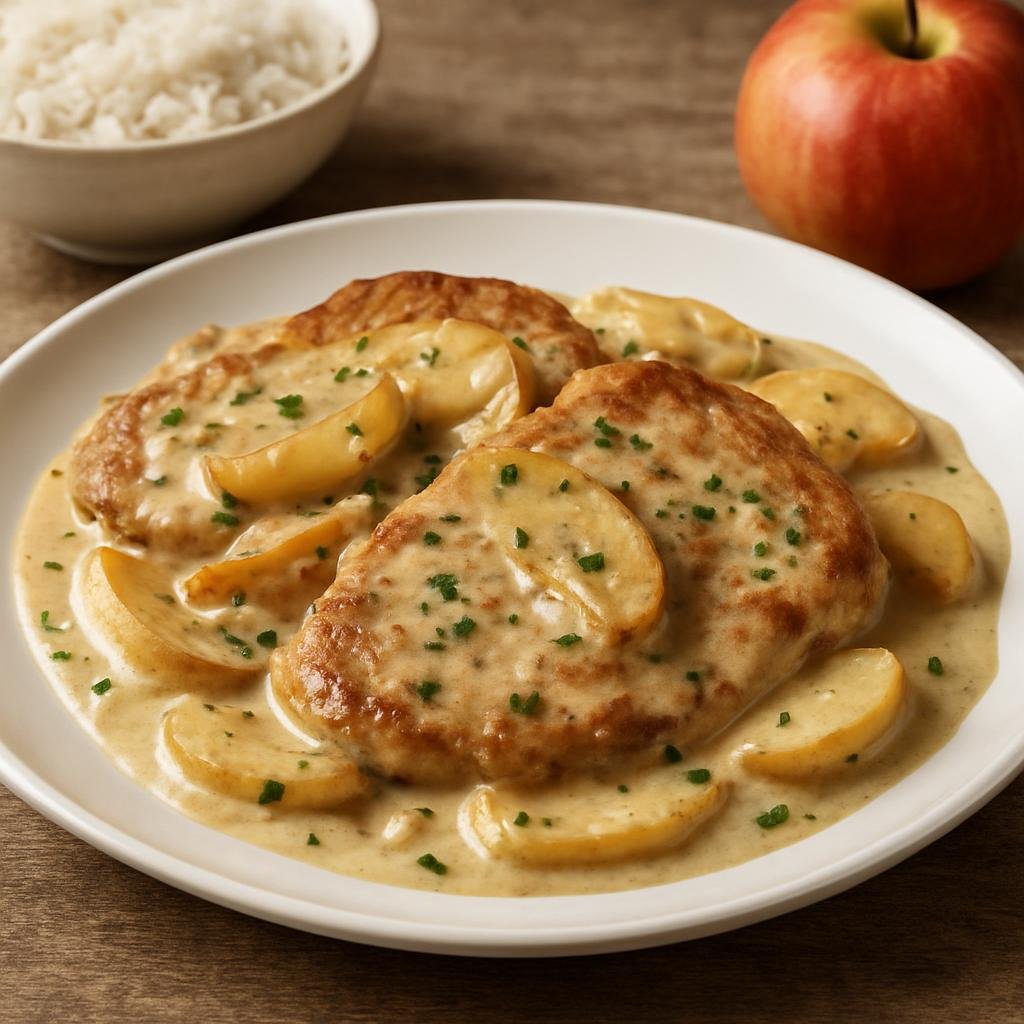
Entree: France – Normandy – Escalope de Veau à la Normande (Pan-fried thin veal cutlets in a creamy apple and Calvados sauce)
Food safety reminder: Follow safe food-handling practices and use a food thermometer to verify safe internal cooking temperatures.
Ingredients
U.S. measurements first, metric equivalents in parentheses. Conversions are approximate; oz means weight ounces, not fluid ounces.
- 4 veal escalopes, approx. 4 oz (115 g) each
- Salt and freshly ground black pepper
- 1/2 cup (60 g) all-purpose flour, for dredging
- 3 tbsp (45 g) unsalted butter
- 2 tbsp (30 ml) olive oil
- 8 oz (225 g) cremini or button mushrooms, sliced
- 1 small shallot, finely chopped (about 1 oz (30 g))
- 1 large apple, cored and thinly sliced (about 6 oz (170 g))
- 1/4 cup (60 ml) Calvados or apple brandy (substitute dry cider if needed)
- 3/4 cup (180 ml) veal or chicken stock
- 3/4 cup (180 ml) heavy cream
- 1 tsp (5 g) Dijon mustard
- 1 tsp (5 ml) fresh lemon juice
- 2 tbsp (8 g) chopped fresh parsley
Show original ingredient measurements
- 4 veal escalopes, approx. 4 oz (115 g) each
- Salt and freshly ground black pepper
- 1/2 cup (60 g) all-purpose flour, for dredging
- 3 tbsp (45 g) unsalted butter
- 2 tbsp (30 ml) olive oil
- 8 oz (225 g) cremini or button mushrooms, sliced
- 1 small shallot, finely chopped (about 1 oz / 30 g)
- 1 large apple, cored and thinly sliced (about 6 oz / 170 g)
- 1/4 cup (60 ml) Calvados or apple brandy (substitute dry cider if needed)
- 3/4 cup (180 ml) veal or chicken stock
- 3/4 cup (180 ml) heavy cream
- 1 tsp (5 g) Dijon mustard
- 1 tsp (5 ml) fresh lemon juice
- 2 tbsp (8 g) chopped fresh parsley
Instructions
U.S. measurements first, metric equivalents in parentheses. Conversions are approximate.
1. Pat the veal escalopes dry and season both sides with salt and pepper. Lightly dredge each escalope in flour, shaking off excess.
2. Heat 1 tbsp (15 ml) butter and 1 tbsp (15 ml) olive oil in a large skillet over medium-high heat. Sear the escalopes 1–2 minutes per side until golden and just cooked through. Transfer to a warm plate and tent with foil.
3. Reduce heat to medium, add remaining 1 tbsp (15 ml) olive oil and 2 tbsp (30 ml) butter. Add the shallot and sauté until soft, about 2 minutes. Add mushrooms and cook until browned and their liquid evaporates, about 4–5 minutes.
4. Add apple slices and cook 2–3 minutes until slightly softened. Pour in Calvados and, carefully, ignite with a long match if desired to flambé and burn off alcohol, or simmer 1 minute to reduce if you prefer not to flambé.
5. Add stock and simmer 2–3 minutes. Stir in cream and Dijon mustard and simmer gently until the sauce thickens slightly, about 3–4 minutes. Adjust seasoning with salt, pepper and lemon juice.
6. Return veal to the pan for 1 minute to warm through and coat with sauce. Sprinkle with chopped parsley and serve immediately with potatoes, buttered noodles, or seasonal vegetables.
Show original instructions
1. Pat the veal escalopes dry and season both sides with salt and pepper. Lightly dredge each escalope in flour, shaking off excess.
2. Heat 1 tbsp butter and 1 tbsp olive oil in a large skillet over medium-high heat. Sear the escalopes 1–2 minutes per side until golden and just cooked through. Transfer to a warm plate and tent with foil.
3. Reduce heat to medium, add remaining 1 tbsp olive oil and 2 tbsp butter. Add the shallot and sauté until soft, about 2 minutes. Add mushrooms and cook until browned and their liquid evaporates, about 4–5 minutes.
4. Add apple slices and cook 2–3 minutes until slightly softened. Pour in Calvados and, carefully, ignite with a long match if desired to flambé and burn off alcohol, or simmer 1 minute to reduce if you prefer not to flambé.
5. Add stock and simmer 2–3 minutes. Stir in cream and Dijon mustard and simmer gently until the sauce thickens slightly, about 3–4 minutes. Adjust seasoning with salt, pepper and lemon juice.
6. Return veal to the pan for 1 minute to warm through and coat with sauce. Sprinkle with chopped parsley and serve immediately with potatoes, buttered noodles, or seasonal vegetables.
Per serving | Servings: 4
Generated: 2026-11-05T19:57:06+00:00
*Values are estimates based on USDA data and mathematical calculations. Actual values may vary. Where data are unavailable, those contributions are excluded. Calories, Carbohydrates, Protein, Fat, Saturated fat, Cholesterol, Fiber, Sugar, Sodium, Potassium, Calcium, Iron, Vitamin A, Vitamin C and Vitamin D are known subtotals. Missing contributions are unknown, not zero.