Entree: Indonesia – Papua – Kue Lontar (Traditional Papuan sago pancake often served with shredded coconut and smoked fish)
Food safety reminder: Follow safe food-handling practices and use a food thermometer to verify safe internal cooking temperatures.
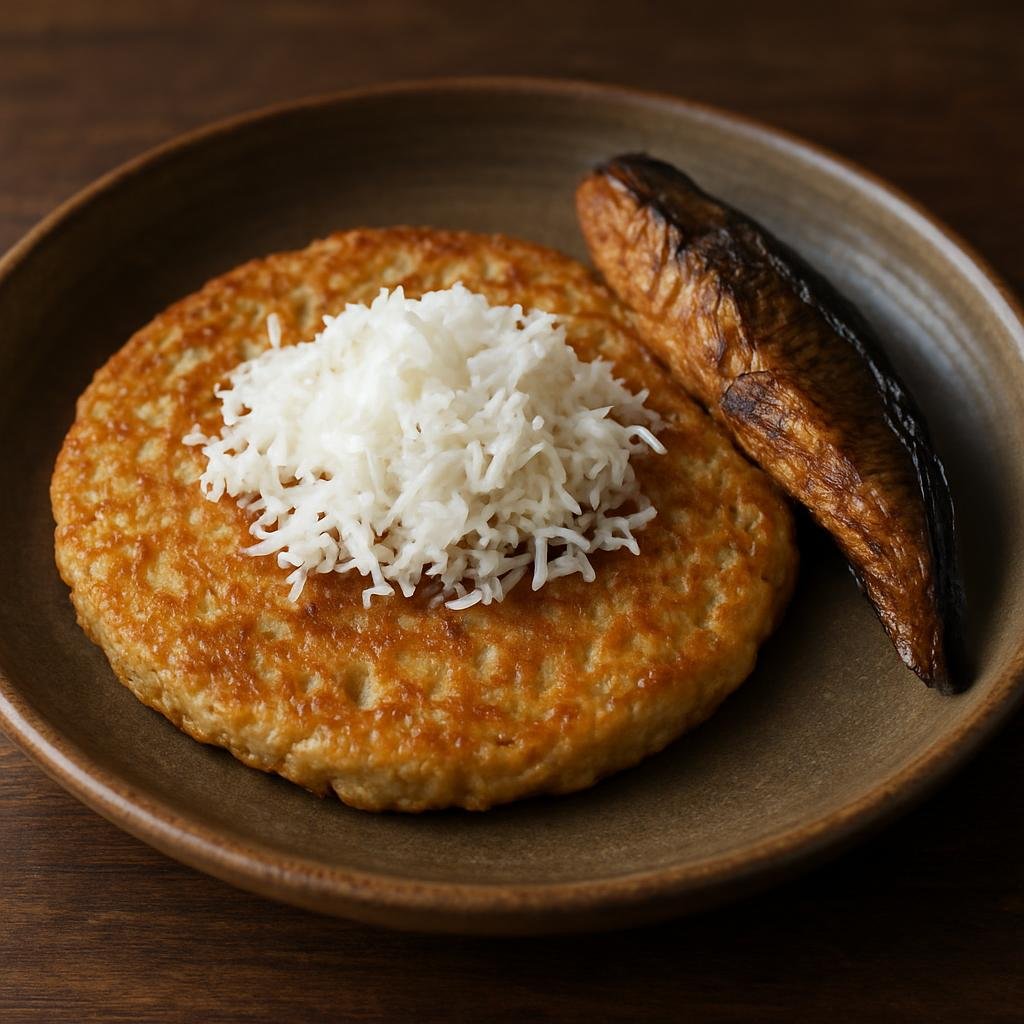
Serving Size: 4
Approximate Time
Prep
20 min
Cook
15 min
Additional
10 min
Total
45 min
Ingredients
U.S. measurements first, metric equivalents in parentheses. Conversions are approximate; oz means weight ounces, not fluid ounces.
2 cups (300 g) sago flour (or sago starch)
1 cup (240 ml) coconut milk
1/2 cup (120 ml) water, warm
1 large egg, approx. 1.75 oz (50 g)
1 tsp (6 g) fine salt
1 tbsp (15 ml) palm sugar syrup or brown sugar dissolved (optional, for slight sweetness)
2 tbsp (30 ml) neutral oil, plus extra for griddle
7 7/8 oz (225 g) smoked mackerel, flaked (Atlantic mackerel as a practical species example; original amount is usable fish) (estimated edible portion: 7 7/8 oz (225 g))
1 cup (80 g) freshly grated coconut (or desiccated rehydrated)
2 scallions, thinly sliced
1 small red chili, thinly sliced (optional)
1 tbsp (15 ml) lime juice
Fresh banana leaves or parchment for serving (optional)
Show original ingredient measurements
2 cups (300 g) sago flour (or sago starch)
1 cup (240 ml) coconut milk
1/2 cup (120 ml) water, warm
1 large egg, approx. 1.75 oz (50 g)
1 tsp (6 g) fine salt
1 tbsp (15 ml) palm sugar syrup or brown sugar dissolved (optional, for slight sweetness)
2 tbsp (30 ml) neutral oil, plus extra for griddle
225 g smoked mackerel, flaked (Atlantic mackerel as a practical species example; original amount is usable fish) (estimated edible portion: 225 g)
1 cup (80 g) freshly grated coconut (or desiccated rehydrated)
2 scallions, thinly sliced
1 small red chili, thinly sliced (optional)
1 tbsp (15 ml) lime juice
Fresh banana leaves or parchment for serving (optional)
Instructions
U.S. measurements first, metric equivalents in parentheses. Conversions are approximate.
1. Prepare batter: In a bowl whisk together 2 cups (480 ml) sago flour, 1 tsp (5 ml) salt, and 1 tbsp (15 ml) palm sugar syrup if using. In another bowl beat 1 large egg with 1 cup (240 ml) coconut milk and 1/2 cup (120 ml) warm water. Gradually add wet mixture to sago, stirring to a smooth, pourable batter. Let rest 10 minutes; adjust with water to reach thin pancake batter consistency.
2. Prepare topping: Flake the smoked fish into bite-sized pieces and mix with grated coconut, sliced scallions, chili if using, and 1 tbsp (15 ml) lime juice. Taste and add a pinch of salt if needed.
3. Cook pancakes: Heat a nonstick skillet or griddle over medium heat and brush lightly with oil. Pour or ladle about 1/4 cup (60 ml) batter for each pancake, spreading thinly into 6–8 inch (15–20 cm) rounds. Cook 1–2 minutes until edges lift and underside is golden, flip and cook 30–60 seconds more. Repeat, keeping finished pancakes warm.
4. Assemble and serve: Place 2–3 pancakes per serving on banana leaves or a plate and top with generous spoonfuls of the smoked fish and coconut mixture. Fold or roll pancakes to eat by hand or with a fork. Serve warm as a filling regional entree.
Show original instructions
1. Prepare batter: In a bowl whisk together 2 cups sago flour, 1 tsp salt, and 1 tbsp palm sugar syrup if using. In another bowl beat 1 large egg with 1 cup coconut milk and 1/2 cup warm water. Gradually add wet mixture to sago, stirring to a smooth, pourable batter. Let rest 10 minutes; adjust with water to reach thin pancake batter consistency.
2. Prepare topping: Flake the smoked fish into bite-sized pieces and mix with grated coconut, sliced scallions, chili if using, and 1 tbsp lime juice. Taste and add a pinch of salt if needed.
3. Cook pancakes: Heat a nonstick skillet or griddle over medium heat and brush lightly with oil. Pour or ladle about 1/4 cup (60 ml) batter for each pancake, spreading thinly into 6–8 inch (15–20 cm) rounds. Cook 1–2 minutes until edges lift and underside is golden, flip and cook 30–60 seconds more. Repeat, keeping finished pancakes warm.
4. Assemble and serve: Place 2–3 pancakes per serving on banana leaves or a plate and top with generous spoonfuls of the smoked fish and coconut mixture. Fold or roll pancakes to eat by hand or with a fork. Serve warm as a filling regional entree.
Estimated Nutritional Information*
Per serving | Servings: 4
Calories: 724 kcal
Carbohydrates: 67.8 g
Protein: 24.4 g
Fat: 39.6 g
Saturated fat: 22.7 g
Cholesterol: 96 mg
Fiber: 5.4 g
Sugar: 6.9 g
Sodium: 1110 mg
Potassium: 576 mg
Calcium: 47 mg
Iron: 6.29 mg
Generated: 2026-11-06T06:57:00+00:00
*Values are estimates based on USDA data and mathematical calculations. Actual values may vary. Where data are unavailable, those contributions are excluded. Calories, Carbohydrates, Protein, Fat, Saturated fat, Cholesterol, Fiber, Sugar, Sodium, Potassium, Calcium and Iron are known subtotals. Missing contributions are unknown, not zero.