Side Dish: United States – Connecticut, New England – Johnnycakes
Food safety reminder: Follow safe food-handling practices and use a food thermometer to verify safe internal cooking temperatures.
Ingredients
U.S. measurements first, metric equivalents in parentheses. Conversions are approximate; oz means weight ounces, not fluid ounces.
- 1 1/2 cups (240 g) white cornmeal, medium or fine grind
- 1/2 cup (65 g) all-purpose flour
- 1 tsp (4 g) baking powder
- 1 tsp (6 g) kosher salt
- 1 tbsp (12 g) granulated sugar (optional)
- 1 1/2 cups (360 ml) whole milk (see notes for buttermilk option)
- 1 large egg, approx. 1 3/4 oz (50 g)
- 2 tbsp (28 g) unsalted butter, melted
- 1–2 tbsp (15–30 ml) neutral oil or vegetable oil, for the griddle
- Extra unsalted butter, for cooking and serving
- Local maple syrup, for serving
Show original ingredient measurements
- 1 1/2 cups (240 g) white cornmeal, medium or fine grind
- 1/2 cup (65 g) all-purpose flour
- 1 tsp (4 g) baking powder
- 1 tsp (6 g) kosher salt
- 1 tbsp (12 g) granulated sugar (optional)
- 1 1/2 cups (360 ml) whole milk (see notes for buttermilk option)
- 1 large egg, approx. 50 g
- 2 tbsp (28 g) unsalted butter, melted
- 1–2 tbsp (15–30 ml) neutral oil or vegetable oil, for the griddle
- Extra unsalted butter, for cooking and serving
- Local maple syrup, for serving
Instructions
U.S. measurements first, metric equivalents in parentheses. Conversions are approximate.
Short Description:
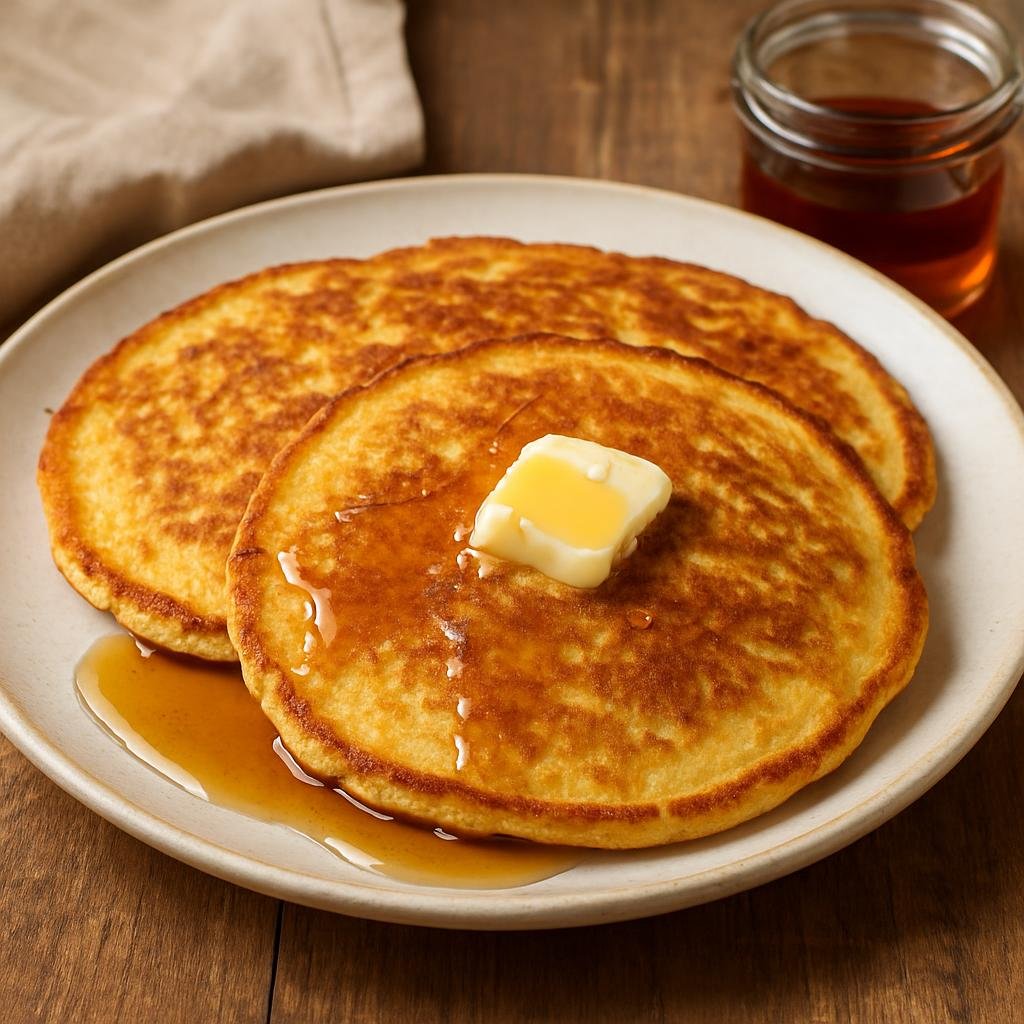
Thin, griddle-cooked cornmeal cakes made with white cornmeal, tenderized with a touch of flour and milk; traditionally served warm with butter and local maple syrup. They are crisp at the edges and soft inside, an old New England accompaniment to breakfasts and dinners.

Regional Notes:
This Connecticut version uses white cornmeal and is cooked on a hot griddle or cast-iron skillet, producing thin, slightly crisp cakes. Serving with butter and local maple syrup reflects Connecticut's agricultural products and local taste; unlike some Southern versions, these are simpler and griddle-fried rather than deep-fried or skillet-baked.

1. In a large bowl whisk together the white cornmeal, all-purpose flour, baking powder, salt, and sugar until evenly combined.
2. In a separate bowl whisk the milk, egg (approx. 1 3/4 oz (50 g)), and melted butter until smooth.
3. Pour the wet ingredients into the dry ingredients and stir until just combined. The batter should be pourable but thick; add up to 2 tbsp (30 ml) more milk if too stiff. Let the batter rest 5–10 minutes to hydrate the cornmeal.
4. Meanwhile, preheat a heavy griddle or cast-iron skillet over medium heat (about 350–375°F / 175–190°C). Brush the surface lightly with 1–2 tbsp (15–30 ml) oil and a little butter for flavor.
5. When the griddle is hot, reduce heat slightly if smoking, and drop about 1/4 cup (60 ml) of batter per cake onto the surface, spacing them 2–3 inches (5.08 to 7.62 cm) apart. For larger johnnycakes use 1/3 cup (80 ml).
6. Cook until the edges look set and the underside is golden brown, about 2–3 minutes. Cornmeal cakes may not form many bubbles; check the underside before flipping.
7. Flip carefully with a thin spatula and cook the second side until golden and cooked through, about 1–2 minutes more. Adjust heat as needed to avoid burning while achieving a crisp edge.
8. Transfer finished johnnycakes to a low oven (200°F / 95°C) to keep warm while you finish the batch. Re-grease the griddle as needed between batches.
9. Serve warm as a side dish with a pat of unsalted butter and a drizzle of local maple syrup. They also pair well with savory mains like fish, pork, or baked beans.
Show original instructions
Short Description:
Thin, griddle-cooked cornmeal cakes made with white cornmeal, tenderized with a touch of flour and milk; traditionally served warm with butter and local maple syrup. They are crisp at the edges and soft inside, an old New England accompaniment to breakfasts and dinners.

Regional Notes:
This Connecticut version uses white cornmeal and is cooked on a hot griddle or cast-iron skillet, producing thin, slightly crisp cakes. Serving with butter and local maple syrup reflects Connecticut's agricultural products and local taste; unlike some Southern versions, these are simpler and griddle-fried rather than deep-fried or skillet-baked.

1. In a large bowl whisk together the white cornmeal, all-purpose flour, baking powder, salt, and sugar until evenly combined.
2. In a separate bowl whisk the milk, egg (approx. 50 g), and melted butter until smooth.
3. Pour the wet ingredients into the dry ingredients and stir until just combined. The batter should be pourable but thick; add up to 2 tbsp (30 ml) more milk if too stiff. Let the batter rest 5–10 minutes to hydrate the cornmeal.
4. Meanwhile, preheat a heavy griddle or cast-iron skillet over medium heat (about 350–375°F / 175–190°C). Brush the surface lightly with 1–2 tbsp (15–30 ml) oil and a little butter for flavor.
5. When the griddle is hot, reduce heat slightly if smoking, and drop about 1/4 cup (60 ml) of batter per cake onto the surface, spacing them 2–3 inches apart. For larger johnnycakes use 1/3 cup (80 ml).
6. Cook until the edges look set and the underside is golden brown, about 2–3 minutes. Cornmeal cakes may not form many bubbles; check the underside before flipping.
7. Flip carefully with a thin spatula and cook the second side until golden and cooked through, about 1–2 minutes more. Adjust heat as needed to avoid burning while achieving a crisp edge.
8. Transfer finished johnnycakes to a low oven (200°F / 95°C) to keep warm while you finish the batch. Re-grease the griddle as needed between batches.
9. Serve warm as a side dish with a pat of unsalted butter and a drizzle of local maple syrup. They also pair well with savory mains like fish, pork, or baked beans.
Per serving | Servings: 6
Generated: 2026-11-05T20:00:58+00:00
*Values are estimates based on USDA data and mathematical calculations. Actual values may vary. Where data are unavailable, those contributions are excluded. Calories, Carbohydrates, Protein, Fat, Saturated fat, Cholesterol, Fiber, Sugar, Sodium, Potassium, Calcium, Iron, Vitamin A and Vitamin D are known subtotals. Missing contributions are unknown, not zero.