Entree: Mexico – Sonora (Northern Mexico) – Carne Asada Sonorense
Food safety reminder: Follow safe food-handling practices and use a food thermometer to verify safe internal cooking temperatures.
Serving Size: 5
Approximate Time
Prep
15 min
Cook
20 min
Additional
4 hrs
Total
4 hrs 35 min
Ingredients
U.S. measurements first, metric equivalents in parentheses. Conversions are approximate; oz means weight ounces, not fluid ounces.
- 3 lb (1.36 kg) skirt steak or flank steak (arrachera), trimmed
- 1/2 cup (120 ml) fresh lime juice (about 4–6 limes)
- 1/3 cup (80 ml) vegetable oil or mild olive oil
- 6 cloves garlic, minced (about 1 1/16 oz (30 g))
- 1 small white onion, finely grated or blended (about 4 oz (115 g))
- 2 serrano chiles, seeded and minced (or 2 jalapenos) (about 0.423 to 0.635 oz (12–18 g))
- 1 tbsp (15 ml) Worcestershire sauce
- 2 tsp (10 ml) kosher salt (for marinade)
- 1 tsp (5 ml) ground cumin
- 1/2 tsp (2.5 ml) freshly ground black pepper
- 1/4 cup (15 g) fresh cilantro, chopped
- 2 tbsp (30 ml) neutral oil (for grilling vegetables)
- 8–10 green onions (cebollitas), trimmed (about 8 oz (225 g))
- 12 8-inch (20 cm) flour tortillas (or corn tortillas if preferred)
- 2 (15 oz (425 g)) cans pinto beans, drained and rinsed
- 4 oz (115 g) bacon, chopped
- 1 small tomato, diced (about 5 oz (140 g))
- 1 small jalapeno, seeded and minced (optional) (about 0.35 oz (10 g))
- 1 cup (240 ml) chicken stock or water
- 1/4 cup (15 g) cilantro, chopped (for beans)
- 1 tsp (5 ml) kosher salt, plus more to taste (for beans)
- 3 medium Roma tomatoes (about 1 lb (450 g)) for salsa
- 1/2 small white onion, finely chopped (about 3 oz (85 g))
- 1/4 cup (15 g) cilantro, chopped (for salsa)
- Juice of 1 lime
- Mesquite wood chunks or chips for grilling (use enough to produce smoke; if using chips, soak 30 minutes)
- Lime wedges, radish slices, and coarse salt for serving
Show original ingredient measurements
- 3 lb (1.36 kg) skirt steak or flank steak (arrachera), trimmed
- 1/2 cup (120 ml) fresh lime juice (about 4–6 limes)
- 1/3 cup (80 ml) vegetable oil or mild olive oil
- 6 cloves garlic, minced (about 30 g)
- 1 small white onion, finely grated or blended (about 4 oz / 115 g)
- 2 serrano chiles, seeded and minced (or 2 jalapenos) (about 12–18 g)
- 1 tbsp (15 ml) Worcestershire sauce
- 2 tsp (10 ml) kosher salt (for marinade)
- 1 tsp (5 ml) ground cumin
- 1/2 tsp (2.5 ml) freshly ground black pepper
- 1/4 cup (15 g) fresh cilantro, chopped
- 2 tbsp (30 ml) neutral oil (for grilling vegetables)
- 8–10 green onions (cebollitas), trimmed (about 8 oz / 225 g)
- 12 8-inch (20 cm) flour tortillas (or corn tortillas if preferred)
- 2 (15 oz / 425 g) cans pinto beans, drained and rinsed
- 4 oz (115 g) bacon, chopped
- 1 small tomato, diced (about 5 oz / 140 g)
- 1 small jalapeno, seeded and minced (optional) (about 10 g)
- 1 cup (240 ml) chicken stock or water
- 1/4 cup (15 g) cilantro, chopped (for beans)
- 1 tsp (5 ml) kosher salt, plus more to taste (for beans)
- 3 medium Roma tomatoes (about 1 lb / 450 g) for salsa
- 1/2 small white onion, finely chopped (about 3 oz / 85 g)
- 1/4 cup (15 g) cilantro, chopped (for salsa)
- Juice of 1 lime
- Mesquite wood chunks or chips for grilling (use enough to produce smoke; if using chips, soak 30 minutes)
- Lime wedges, radish slices, and coarse salt for serving
Instructions
U.S. measurements first, metric equivalents in parentheses. Conversions are approximate.
Short Description:
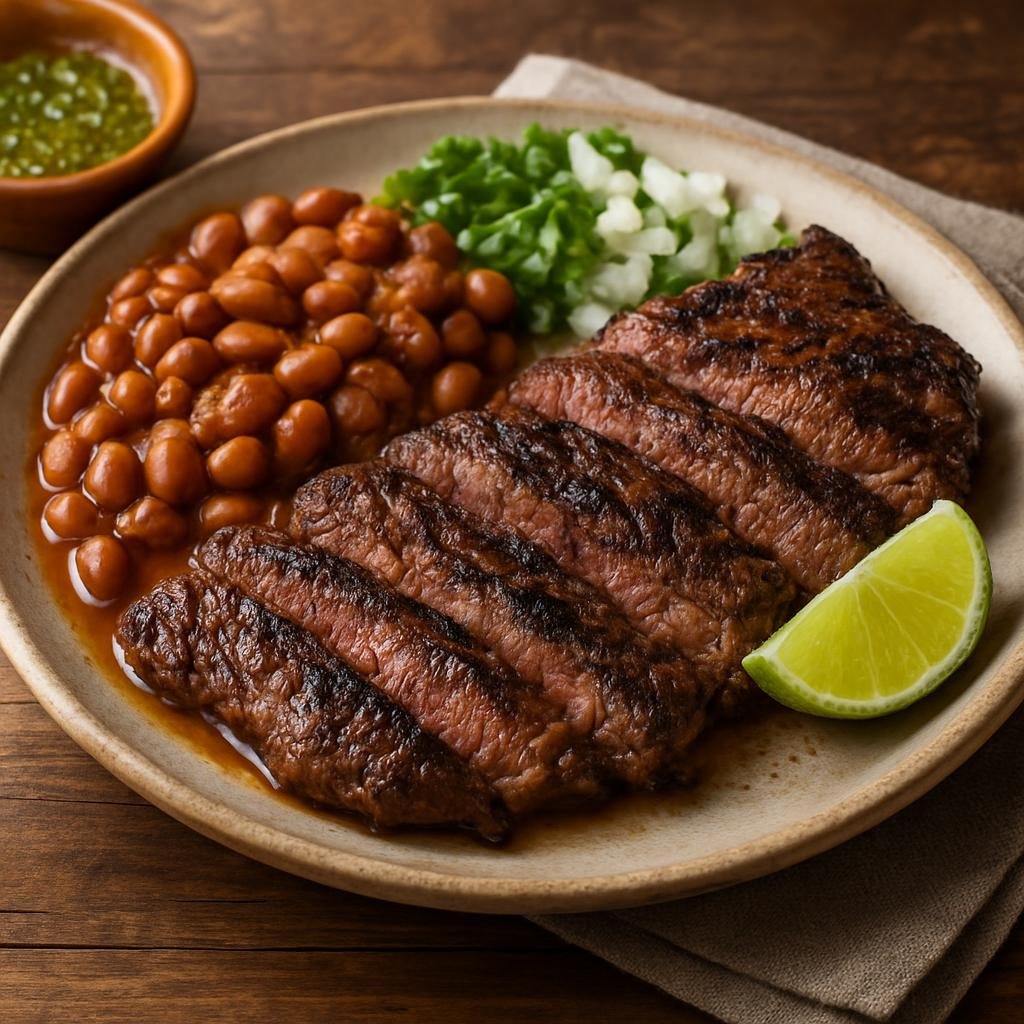
A rustic Sonoran carne asada: citrus- and garlic-forward marinated beef grilled over mesquite for a pronounced smoky char, served with charro-style pinto beans, grilled cebollitas (green onions), fresh salsa, and warm tortillas. This is a complete main-course meal built for sharing.

Regional Notes:
Sonora's version highlights local beef (often arrachera or skirt/flank) and a bright lime-garlic-chile marinade, finished over mesquite wood for a distinctive smoky flavor; unlike central Mexican carne asada, Sonorense emphasizes open-fire grilling and simple sides like charro beans and grilled cebollitas. This recipe uses those ingredients and techniques to recreate the regional profile.

1. Prepare the marinade: in a bowl combine lime juice, oil, minced garlic, grated onion, minced serranos, Worcestershire, 2 tsp (10 ml) kosher salt, cumin, black pepper, and 1/4 cup (60 ml) chopped cilantro. Whisk until blended.
2. Marinate the steak: place the trimmed steak in a shallow dish or resealable bag and pour the marinade over it, massaging to coat. Refrigerate for 2–6 hours (up to 12 hours for deeper flavor); avoid much longer with skirt/flank to prevent texture changes.
3. Start the beans and salsa: for salsa, char the Roma tomatoes over a gas flame or under a broiler until blackened on the skin, let cool, then chop and mix with 1/2 chopped onion, 1/4 cup (60 ml) cilantro, lime juice, and salt to taste. For charro beans, heat a medium skillet over medium, cook chopped bacon until crisp, add diced tomato and minced jalapeno and cook 1–2 minutes; add drained pinto beans and 1 cup (240 ml) chicken stock, simmer 10–12 minutes until slightly thickened, stir in 1/4 cup (60 ml) cilantro and 1 tsp (5 ml) salt, keep warm.
4. Prepare the grill: set up a charcoal or wood grill for high direct heat. Add mesquite wood chunks or drip mesquite chips on the coals (or in a smoker box for gas) to produce a strong smoky flame; allow the fire to reach a steady high heat with hot coals and visible smoke.
5. Grill the cebollitas and tortillas: toss green onions with 2 tbsp (30 ml) oil and a pinch of salt. Place cebollitas and tortillas (wrapped in foil or on a cooler part of grill) on the grill; cook cebollitas 3–5 minutes per side until charred and softened, turning as needed; warm tortillas 30–60 seconds per side until pliable and slightly charred. Remove and keep warm.
6. Grill the steak: remove steak from marinade and let excess drip off; season lightly with additional coarse salt and cracked black pepper. Place steak over the hottest part of the grill directly over mesquite heat. For a 3 lb (1.36 kg) skirt/flank (about 1/2–3/4 inch (1.27 to 1.91 cm) thick), grill 3–5 minutes per side for medium-rare to medium, rotating once for crosshatch marks and watching for flare-ups; adjust time for thickness. Use an instant-read thermometer if desired: 130–135°F (54–57°C) for medium-rare, 140°F (60°C) for medium.
7. Rest and slice: transfer steak to a cutting board and rest 8–10 minutes to allow juices to redistribute. Slice thinly across the grain against the muscle fibers for tender pieces.
8. Plate and serve: arrange sliced carne asada on a platter with grilled cebollitas, warmed tortillas, a bowl of charro beans, and fresh salsa. Serve with lime wedges, radish slices, extra chopped cilantro, and coarse salt for seasoning at the table.
9. Leftovers: store sliced beef and beans separately in airtight containers in the refrigerator for up to 3 days; reheat gently on a griddle or skillet to preserve texture.
Show original instructions
Short Description:
A rustic Sonoran carne asada: citrus- and garlic-forward marinated beef grilled over mesquite for a pronounced smoky char, served with charro-style pinto beans, grilled cebollitas (green onions), fresh salsa, and warm tortillas. This is a complete main-course meal built for sharing.

Regional Notes:
Sonora's version highlights local beef (often arrachera or skirt/flank) and a bright lime-garlic-chile marinade, finished over mesquite wood for a distinctive smoky flavor; unlike central Mexican carne asada, Sonorense emphasizes open-fire grilling and simple sides like charro beans and grilled cebollitas. This recipe uses those ingredients and techniques to recreate the regional profile.

1. Prepare the marinade: in a bowl combine lime juice, oil, minced garlic, grated onion, minced serranos, Worcestershire, 2 tsp kosher salt, cumin, black pepper, and 1/4 cup chopped cilantro. Whisk until blended.
2. Marinate the steak: place the trimmed steak in a shallow dish or resealable bag and pour the marinade over it, massaging to coat. Refrigerate for 2–6 hours (up to 12 hours for deeper flavor); avoid much longer with skirt/flank to prevent texture changes.
3. Start the beans and salsa: for salsa, char the Roma tomatoes over a gas flame or under a broiler until blackened on the skin, let cool, then chop and mix with 1/2 chopped onion, 1/4 cup cilantro, lime juice, and salt to taste. For charro beans, heat a medium skillet over medium, cook chopped bacon until crisp, add diced tomato and minced jalapeno and cook 1–2 minutes; add drained pinto beans and 1 cup chicken stock, simmer 10–12 minutes until slightly thickened, stir in 1/4 cup cilantro and 1 tsp salt, keep warm.
4. Prepare the grill: set up a charcoal or wood grill for high direct heat. Add mesquite wood chunks or drip mesquite chips on the coals (or in a smoker box for gas) to produce a strong smoky flame; allow the fire to reach a steady high heat with hot coals and visible smoke.
5. Grill the cebollitas and tortillas: toss green onions with 2 tbsp oil and a pinch of salt. Place cebollitas and tortillas (wrapped in foil or on a cooler part of grill) on the grill; cook cebollitas 3–5 minutes per side until charred and softened, turning as needed; warm tortillas 30–60 seconds per side until pliable and slightly charred. Remove and keep warm.
6. Grill the steak: remove steak from marinade and let excess drip off; season lightly with additional coarse salt and cracked black pepper. Place steak over the hottest part of the grill directly over mesquite heat. For a 3 lb skirt/flank (about 1/2–3/4 inch thick), grill 3–5 minutes per side for medium-rare to medium, rotating once for crosshatch marks and watching for flare-ups; adjust time for thickness. Use an instant-read thermometer if desired: 130–135°F (54–57°C) for medium-rare, 140°F (60°C) for medium.
7. Rest and slice: transfer steak to a cutting board and rest 8–10 minutes to allow juices to redistribute. Slice thinly across the grain against the muscle fibers for tender pieces.
8. Plate and serve: arrange sliced carne asada on a platter with grilled cebollitas, warmed tortillas, a bowl of charro beans, and fresh salsa. Serve with lime wedges, radish slices, extra chopped cilantro, and coarse salt for seasoning at the table.
9. Leftovers: store sliced beef and beans separately in airtight containers in the refrigerator for up to 3 days; reheat gently on a griddle or skillet to preserve texture.
Estimated Nutritional Information*
Per serving | Servings: 5
Calories: 1312 kcal
Carbohydrates: 90.5 g
Protein: 75.8 g
Fat: 73.6 g
Cholesterol: 193 mg
Sodium: 2762 mg
Potassium: 1599 mg
Calcium: 318 mg
Iron: 10.94 mg
Vitamin C: 39.8 mg
Vitamin D: 0.4 µg
Nutrition estimated: November 5, 2026
*Values are estimates based on USDA data and mathematical calculations. Actual values may vary. Where data are unavailable, those contributions are excluded. Calories, Carbohydrates, Protein, Fat, Cholesterol, Sodium, Potassium, Calcium, Iron, Vitamin C and Vitamin D are known subtotals. Missing contributions are unknown, not zero.