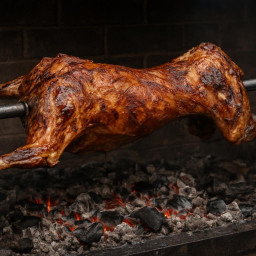
Entree: Turkey – Çevirme (Whole lamb rotated over coals until tender and crisp)
Food safety reminder: Follow safe food-handling practices and use a food thermometer to verify safe internal cooking temperatures.
Serving Size: 10
Approximate Time
Prep
20 min
Cook
6 hrs
Additional
8 hrs
Total
8 hrs
Ingredients
U.S. measurements first, metric equivalents in parentheses. Conversions are approximate; oz means weight ounces, not fluid ounces.
- 1 whole lamb, approx. 20 lb (9 kg) total, prepared for spit-roasting
- 1 cup (240 ml) olive oil
- 6 cloves garlic, crushed (approx. 0.4 oz (12 g))
- 4 tbsp (60 ml) coarse sea salt
- 2 tbsp (30 ml) ground cumin
- 2 tbsp (30 ml) sweet paprika
- 4 lemons, juiced (approx. 1 cup (240 ml))
- 2 tbsp (30 ml) tomato paste (optional)
- 2 tsp (10 g) freshly ground black pepper
- 2 cups (480 ml) charcoal or oak coals (for fuel)
Show original ingredient measurements
- 1 whole lamb, approx. 20 lb (9 kg) total, prepared for spit-roasting
- 1 cup (240 ml) olive oil
- 6 cloves garlic, crushed (approx. 0.4 oz / 12 g)
- 4 tbsp (60 ml) coarse sea salt
- 2 tbsp (30 ml) ground cumin
- 2 tbsp (30 ml) sweet paprika
- 4 lemons, juiced (approx. 1 cup / 240 ml)
- 2 tbsp (30 ml) tomato paste (optional)
- 2 tsp (10 g) freshly ground black pepper
- 2 cups (480 ml) charcoal or oak coals (for fuel)
Instructions
1. Combine olive oil, crushed garlic, lemon juice, cumin, paprika, tomato paste (if using), salt and pepper to form a basting mixture. Rub generously over the lamb and inside cavities; marinate refrigerated 4–12 hours.
2. Set up a rotisserie or spit with a low, even heat under indirect coals (target 225–300°F / 107–150°C). Secure the lamb on the spit and begin slow rotation.
3. Baste every 20–30 minutes with reserved basting mixture and pan juices; maintain steady coals and add fuel as needed to keep a consistent low heat.
4. Roast until the thickest part of the meat reaches 145–160°F (63–71°C) for medium to medium-well and skin is crisp, generally 4–6 hours depending on size. For traditional softer texture, extend to 170°F (77°C) as preferred.
5. Remove from spit, rest 20–30 minutes under loose foil, carve and serve with rice pilaf, salads and lemon wedges.
Estimated Nutritional Information*
Per serving | Servings: 10
Calories: 2894 kcal
Carbohydrates: 6.9 g
Protein: 139.6 g
Fat: 257.9 g
Saturated fat: 103.5 g
Cholesterol: 621 mg
Fiber: 1.6 g
Sugar: 1.1 g
Sodium: 3364 mg
Potassium: 2491 mg
Calcium: 156 mg
Iron: 12.73 mg
Vitamin A: 181 µg RAE
Vitamin C: 12.6 mg
Vitamin D: 0.9 µg
Generated: 2026-11-06T05:44:35+00:00
*Values are estimates based on USDA data and mathematical calculations. Actual values may vary. Where data are unavailable, those contributions are excluded. Calories, Carbohydrates, Protein, Fat, Saturated fat, Cholesterol, Fiber, Sugar, Sodium, Potassium, Calcium, Iron, Vitamin A, Vitamin C and Vitamin D are known subtotals. Missing contributions are unknown, not zero.