Entrée: France – Canard Confit Avec Pommes Sarladaises (Duck Confit with Sarladaise Potatoes)
Food safety reminder: Follow safe food-handling practices and use a food thermometer to verify safe internal cooking temperatures.
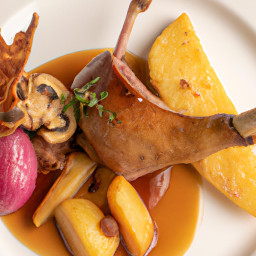
Serving Size: 4
Approximate Time
Prep
10 min
Cook
35 min
Total
45 min
Ingredients
U.S. measurements first, metric equivalents in parentheses. Conversions are approximate; oz means weight ounces, not fluid ounces.
2–4 duck confit legs
2 lb (900 g) waxy potatoes (Yukon Gold or similar), peeled and thinly sliced (about 1 / 8" / 0.118 in (3 mm))
3–4 tbsp (45–60 ml) duck fat (reserved from confit)
3 cloves garlic, minced or finely crushed
2 tbsp (30 ml) fresh parsley, chopped
Salt to taste
Freshly ground black pepper to taste
Optional: a squeeze of lemon
Show original ingredient measurements
2–4 duck confit legs
2 lb (900 g) waxy potatoes (Yukon Gold or similar), peeled and thinly sliced (about 1 / 8" / 3 mm)
3–4 tbsp (45–60 ml) duck fat (reserved from confit)
3 cloves garlic, minced or finely crushed
2 tbsp (30 ml) fresh parsley, chopped
Salt to taste
Freshly ground black pepper to taste
Optional: a squeeze of lemon
Instructions
1. Preheat oven to 375°F (190°C). Place duck confit legs on a tray and warm in the oven 10–15 minutes until heated through. For extra-crisp skin, finish under a hot broiler 1–2 minutes watching carefully.
2. While duck warms, heat a large skillet over medium heat and add the duck fat. Add the sliced potatoes in an even layer; season with salt and pepper.
3. Cook potatoes slowly, stirring occasionally, until they are tender and golden brown (20–30 minutes). Adjust heat to avoid burning; add a couple tablespoons of water if sticking too much and cover briefly to steam.
4. In the last 2 minutes, add garlic and toss to coat so garlic softens but does not burn; remove from heat and stir in chopped parsley.
5. Plate the crisped duck confit with a generous portion of pommes sarladaises alongside. Finish with a little extra parsley and an optional squeeze of lemon.
Estimated Nutritional Information*
Per serving | Servings: 4
Calories: 177 kcal
Carbohydrates: 40.2 g
Protein: 4.8 g
Fat: 0.2 g
Saturated fat: 0.1 g
Fiber: 4.8 g
Sugar: 1.9 g
Sodium: 15 mg
Potassium: 976 mg
Calcium: 34 mg
Iron: 1.98 mg
Vitamin A: 8 µg RAE
Vitamin C: 47.6 mg
Generated: 2026-11-05T19:35:37+00:00
*Values are estimates based on USDA data and mathematical calculations. Actual values may vary. Where data are unavailable, those contributions are excluded. Calories, Carbohydrates, Protein, Fat, Saturated fat, Fiber, Sugar, Sodium, Potassium, Calcium, Iron, Vitamin A and Vitamin C are known subtotals. Missing contributions are unknown, not zero.