Appetizer: Indonesia – Sate Lilit (Balinese Minced Satay)
Food safety reminder: Follow safe food-handling practices and use a food thermometer to verify safe internal cooking temperatures.
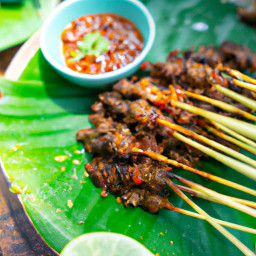
Serving Size: 4
Approximate Time
Prep
40 min
Cook
12 min
Additional
30 min
Total
1 hr 10 min
Ingredients
U.S. measurements first, metric equivalents in parentheses. Conversions are approximate; oz means weight ounces, not fluid ounces.
1 lb (500 g) minced fish (firm white fish such as tuna or mahi-mahi) or minced chicken/pork (such as minced cod)
1 1 / 2 cups (150 g) freshly grated coconut (or desiccated coconut, lightly toasted)
2–3 stalks lemongrass, trimmed to 5–6 inches (12–15 cm) for skewers (or 8–10 bamboo skewers, soaked 30 minutes)
6 shallots, peeled
4 garlic cloves
2 red chilies (bird's eye or cayenne), seeds removed for milder heat
3 / 4 inch (2 cm) fresh galangal (or ginger if unavailable)
3 / 4 inch (2 cm) fresh turmeric (or 1 tsp (5 ml) ground turmeric)
3 kaffir lime leaves, ribs removed (or 1 tbsp (15 ml) lime zest), about 0.05 oz (1.5 g)
1 egg white (or 1 tbsp (15 ml) rice flour) to help bind (optional)
2 tbsp (30 ml) coconut milk
1 tbsp (15 ml) neutral oil (vegetable or coconut oil)
1 tbsp (15 ml) fish sauce or 1 tsp (5 ml) shrimp paste (terasi), optional for extra umami
1 tsp (5 ml) salt
1 tsp (5 ml) palm sugar or brown sugar
1 / 2 tsp (2.5 ml) white or black pepper
Lime wedges and sambal (chili sauce) for serving
Show original ingredient measurements
1 lb / 500 g minced fish (firm white fish such as tuna or mahi-mahi) or minced chicken/pork (such as minced cod)
1 1 / 2 cups / 150 g freshly grated coconut (or desiccated coconut, lightly toasted)
2–3 stalks lemongrass, trimmed to 5–6 inches / 12–15 cm for skewers (or 8–10 bamboo skewers, soaked 30 minutes)
6 shallots, peeled
4 garlic cloves
2 red chilies (bird's eye or cayenne), seeds removed for milder heat
3 / 4 inch / 2 cm fresh galangal (or ginger if unavailable)
3 / 4 inch / 2 cm fresh turmeric (or 1 tsp ground turmeric)
3 kaffir lime leaves, ribs removed (or 1 tbsp lime zest), about 0.05 oz (1.5 g)
1 egg white (or 1 tbsp rice flour) to help bind (optional)
2 tbsp (30 ml) coconut milk
1 tbsp (15 ml) neutral oil (vegetable or coconut oil)
1 tbsp (15 ml) fish sauce or 1 tsp shrimp paste (terasi), optional for extra umami
1 tsp salt
1 tsp palm sugar or brown sugar
1 / 2 tsp white or black pepper
Lime wedges and sambal (chili sauce) for serving
Instructions
U.S. measurements first, metric equivalents in parentheses. Conversions are approximate.
Prepare skewers: if using lemongrass, trim leaves and tough outer layers and cut stalks into 4 3/4 to 5 7/8 in (12–15 cm) lengths; bruise the thicker end slightly so meat adheres. If using bamboo skewers, soak them in water for 30 minutes.
Make the spice paste: in a food processor or mortar and pestle, blend shallots, garlic, chilies, galangal, turmeric, kaffir lime leaves (or lime zest), oil and fish sauce/shrimp paste (if using) to a smooth paste. Scrape down sides as needed.
Mix filling: in a bowl combine the minced fish or meat, grated coconut, spice paste, coconut milk, egg white or rice flour (if using), salt, sugar and pepper. Mix thoroughly until the mixture becomes sticky and cohesive; chill 20–30 minutes to firm up if time allows.
Shape onto skewers: wet your hands slightly. Take about 2–3 tablespoons (30 to 45 ml) of the mixture and press it evenly around the bruised end of each lemongrass stalk or along a soaked bamboo skewer, forming a sausage-like coating about 0.394 to 0.591 in (1–1.5 cm) thick. Smooth the surface so it adheres well to the skewer.
Preheat grill or grill pan: heat a charcoal or gas grill to medium, or preheat a grill pan/skillet over medium heat. Lightly oil the grates or pan.
Grill the sate: place the skewers on the grill and cook 8–12 minutes, turning frequently so they brown and char evenly. Brush occasionally with a little coconut milk for sheen and extra flavor. For chicken, cook until internal temperature reaches 74°C (165°F); for fish, cook until opaque and firm throughout.
Alternative oven method: arrange skewers on a lined baking sheet and broil 6–8 minutes per side, watching closely to avoid burning.
Serve: transfer to a platter and serve hot with lime wedges, sambal and steamed rice or lontong. Sate Lilit is traditionally eaten by sliding the meat off the lemongrass and into rice, or eaten directly from the stick.
Show original instructions
Prepare skewers: if using lemongrass, trim leaves and tough outer layers and cut stalks into 12–15 cm lengths; bruise the thicker end slightly so meat adheres. If using bamboo skewers, soak them in water for 30 minutes.
Make the spice paste: in a food processor or mortar and pestle, blend shallots, garlic, chilies, galangal, turmeric, kaffir lime leaves (or lime zest), oil and fish sauce/shrimp paste (if using) to a smooth paste. Scrape down sides as needed.
Mix filling: in a bowl combine the minced fish or meat, grated coconut, spice paste, coconut milk, egg white or rice flour (if using), salt, sugar and pepper. Mix thoroughly until the mixture becomes sticky and cohesive; chill 20–30 minutes to firm up if time allows.
Shape onto skewers: wet your hands slightly. Take about 2–3 tablespoons of the mixture and press it evenly around the bruised end of each lemongrass stalk or along a soaked bamboo skewer, forming a sausage-like coating about 1–1.5 cm thick. Smooth the surface so it adheres well to the skewer.
Preheat grill or grill pan: heat a charcoal or gas grill to medium, or preheat a grill pan/skillet over medium heat. Lightly oil the grates or pan.
Grill the sate: place the skewers on the grill and cook 8–12 minutes, turning frequently so they brown and char evenly. Brush occasionally with a little coconut milk for sheen and extra flavor. For chicken, cook until internal temperature reaches 74°C (165°F); for fish, cook until opaque and firm throughout.
Alternative oven method: arrange skewers on a lined baking sheet and broil 6–8 minutes per side, watching closely to avoid burning.
Serve: transfer to a platter and serve hot with lime wedges, sambal and steamed rice or lontong. Sate Lilit is traditionally eaten by sliding the meat off the lemongrass and into rice, or eaten directly from the stick.
Estimated Nutritional Information*
Per serving | Servings: 4
Calories: 356 kcal
Carbohydrates: 21.2 g
Protein: 26.8 g
Fat: 19.3 g
Fiber: 6.1 g
Generated: 2026-11-06T05:01:15+00:00
*Values are estimates based on USDA data and mathematical calculations. Actual values may vary. Where data are unavailable, those contributions are excluded. Calories, Carbohydrates, Protein, Fat and Fiber are known subtotals. Missing contributions are unknown, not zero.