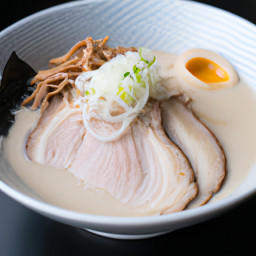
Entrée: Japan – 豚骨ラーメン ▶ Tonkotsu Ramen (Pork Bone Broth Ramen)
Food safety reminder: Follow safe food-handling practices and use a food thermometer to verify safe internal cooking temperatures.
Serving Size: 4
Approximate Time
Prep
1 hr
Cook
12 hrs
Additional
6 hrs
Total
13 hrs
Ingredients
U.S. measurements first, metric equivalents in parentheses. Conversions are approximate; oz means weight ounces, not fluid ounces.
8–10 lb (3.5–4.5 kg) mixed pork bones (neck, trotters, knuckles, femurs; include some marrow and fatty pieces)
1 chicken carcass or 1 lb (450 g) chicken wings (optional)
12–14 cups (3–3.5 L) cold water
1 large yellow onion, halved
1 head garlic, halved crosswise
2-inch (5 cm) knob fresh ginger, smashed and sliced
6–8 green onion tops (dark green ends), tied into a bundle
1–2 sheets kombu (dried kelp), 2–4 inches (5–10 cm) each (optional)
1–2 tbsp (15 to 30 ml) neutral oil or pork lard
1 cup (240 ml) soy sauce
½ cup (120 ml) mirin
¼ cup (60 ml) sake
2 tbsp (30 ml) granulated sugar
1–1.5 lb (450–700 g) pork belly, skin removed or left on, rolled and tied
2 cups (480 ml) water
2 green onions, sliced
1 knob ginger, smashed
2 cloves garlic, crushed
4 large eggs
½ cup (120 ml) tare + ½ cup (120 ml) water (for egg marinade)
4 portions fresh ramen noodles (about 2.82 to 4 1/4 oz (80–120 g) each, or 11 1/4 to 16 7/8 oz (320–480 g) total)
1 cup (240 ml) menma (bamboo shoots), store-bought or homemade
½ cup (120 ml) kikurage (wood ear) mushrooms, rehydrated and sliced
4 sheets nori (seaweed)
Sliced green onion (negi) for garnish
Toasted sesame seeds, toasted garlic chips, and/or rayu (chili oil) to taste
1–2 tbsp (15 to 30 ml) finishing oil: chicken fat, pork lard, or garlic oil (optional)
Show original ingredient measurements
8–10 lb (3.5–4.5 kg) mixed pork bones (neck, trotters, knuckles, femurs; include some marrow and fatty pieces)
1 chicken carcass or 1 lb (450 g) chicken wings (optional)
12–14 cups (3–3.5 L) cold water
1 large yellow onion, halved
1 head garlic, halved crosswise
2-inch (5 cm) knob fresh ginger, smashed and sliced
6–8 green onion tops (dark green ends), tied into a bundle
1–2 sheets kombu (dried kelp), 2–4 inches (5–10 cm) each (optional)
1–2 tbsp neutral oil or pork lard
1 cup (240 ml) soy sauce
½ cup (120 ml) mirin
¼ cup (60 ml) sake
2 tbsp granulated sugar
1–1.5 lb (450–700 g) pork belly, skin removed or left on, rolled and tied
2 cups (480 ml) water
2 green onions, sliced
1 knob ginger, smashed
2 cloves garlic, crushed
4 large eggs
½ cup tare + ½ cup water (for egg marinade)
4 portions fresh ramen noodles (about 80–120 g each, or 320–480 g total)
1 cup menma (bamboo shoots), store-bought or homemade
½ cup kikurage (wood ear) mushrooms, rehydrated and sliced
4 sheets nori (seaweed)
Sliced green onion (negi) for garnish
Toasted sesame seeds, toasted garlic chips, and/or rayu (chili oil) to taste
1–2 tbsp finishing oil: chicken fat, pork lard, or garlic oil (optional)
Instructions
U.S. measurements first, metric equivalents in parentheses. Conversions are approximate.
1. Prepare and blanch the bones: Place pork bones and chicken carcass (if using) in a large stockpot and cover with cold water. Bring to a rolling boil over high heat for 10–15 minutes to remove blood and impurities.
2. Thorough rinse: Drain the bones and discard the blanching water. Rinse the bones under cold running water and scrub any coagulated residue from the pot. Rinse the pot too. This step keeps the final broth cleaner-tasting while still allowing collagen extraction.
3. Start the tonkotsu broth: Return the cleaned bones to the pot and add fresh cold water to cover (about 12–14 cups (2880 to 3360 ml) or enough to submerge bones). Add onion, garlic halves, sliced ginger, and the tied green onion tops. If using kombu, add it now but remove after 20–30 minutes of initial heating so it doesn't impart too much kelp flavor.
4. High-heat simmer and emulsify: Bring to a rapid boil, then reduce to a rolling simmer. Traditional tonkotsu is often kept at a vigorous simmer (not gentle) to break down collagen and emulsify fat into the broth—this yields the signature milky-white broth. Simmer uncovered for 12–18 hours, topping up with hot water as needed to keep bones submerged. Every 30–60 minutes, stir and gently agitate bones to help release collagen. If you prefer less intense fat, occasionally skim the surface, but be aware excessive skimming can reduce creaminess. Alternative: Pressure cooker/Instant Pot: After blanching and rinsing, place bones and aromatics in the cooker with water and pressure-cook for 2–3 hours, then release. This produces a very rich broth faster.
5. Strain the broth: When the broth has become rich, opaque, and flavorful, strain it through a fine-mesh sieve or cheesecloth into a clean pot. Discard solids. To clarify slightly, you may let the broth rest in the refrigerator and remove the hardened fat layer on top if desired. For authentic tonkotsu mouthfeel, leave some fat in the broth and reserve a little for finishing oil.
6. Make the tare (soy tare) while the broth simmers: In a small saucepan combine soy sauce, mirin, sake, sugar, and optional kombu/bonito. Warm gently until sugar dissolves, bring to a low simmer for 3–4 minutes, then remove kombu and strain off bonito if used. Cool and set aside. Reserve ½ cup (120 ml) of this for ajitama marinade.
7. Prepare chashu pork: Tie the pork belly into a tight roll. In a pot, combine soy sauce, mirin, sake, sugar and 2 cups (480 ml) water with green onion, smashed ginger, and crushed garlic. Add the rolled pork belly, bring to a simmer, and cook gently for 1.5–2.5 hours until very tender. Turn occasionally. Let cool in the braising liquid to absorb flavor, then refrigerate until firm for easy slicing. Slice into 0.236 to 0.315 in (6–8 mm) rounds when ready to serve.
8. Make ajitama (marinated soft-boiled eggs): Bring a pot of water to a rolling boil. Gently lower eggs and cook for 6–7 minutes for a jammy yolk (adjust by altitude and egg size). Immediately transfer to an ice bath for 5–10 minutes. Peel when cooled. Mix reserved ½ cup (120 ml) tare with ½ cup (120 ml) water, submerge peeled eggs in the marinade for at least 4 hours or overnight in the fridge. Halve eggs before serving.
9. Prepare other toppings: Rehydrate and slice kikurage mushrooms; warm menma in a little tare or sesame oil; slice green onions; toast sesame seeds. If using garlic oil or back-fat oil, warm the fat gently with crushed garlic until fragrant and strain.
10. Cook ramen noodles: Bring a large pot of water to a rolling boil. Cook fresh ramen noodles per package directions (usually 60–90 seconds) until just al dente. Do not overcook. Drain the noodles well but do not rinse.
11. Assemble each bowl: For each serving, add 1–2 tbsp (15 to 30 ml) (adjust by taste) hot tare to the bottom of a warmed bowl. Add cooked noodles. Ladle about 2 cups (500–600 ml) of very hot tonkotsu broth over the noodles—the hot broth will melt the tare into the bowl. Swirl to combine if needed.
12. Top the ramen: Arrange 2–3 slices chashu, half an ajitama, a handful of menma, some sliced green onion, kikurage, and 1 sheet nori on each bowl. Drizzle 1 tsp (5 ml) finishing oil (pork lard, garlic oil, or chili oil) and scatter toasted sesame seeds or garlic chips as desired. Add freshly ground black pepper or rayu to taste.
13. Serve immediately: Tonkotsu is best eaten hot and fresh. Encourage diners to stir the bowl to emulsify tare and broth, then enjoy quickly so noodles stay firm.
14. Storage: Broth keeps refrigerated for 3–4 days or frozen for up to 3 months. Reheat gently and skim or reintroduce reserved fats as desired. Tare and chashu also store several days refrigerated; tare can be frozen.
Show original instructions
1. Prepare and blanch the bones: Place pork bones and chicken carcass (if using) in a large stockpot and cover with cold water. Bring to a rolling boil over high heat for 10–15 minutes to remove blood and impurities.
2. Thorough rinse: Drain the bones and discard the blanching water. Rinse the bones under cold running water and scrub any coagulated residue from the pot. Rinse the pot too. This step keeps the final broth cleaner-tasting while still allowing collagen extraction.
3. Start the tonkotsu broth: Return the cleaned bones to the pot and add fresh cold water to cover (about 12–14 cups or enough to submerge bones). Add onion, garlic halves, sliced ginger, and the tied green onion tops. If using kombu, add it now but remove after 20–30 minutes of initial heating so it doesn't impart too much kelp flavor.
4. High-heat simmer and emulsify: Bring to a rapid boil, then reduce to a rolling simmer. Traditional tonkotsu is often kept at a vigorous simmer (not gentle) to break down collagen and emulsify fat into the broth—this yields the signature milky-white broth. Simmer uncovered for 12–18 hours, topping up with hot water as needed to keep bones submerged. Every 30–60 minutes, stir and gently agitate bones to help release collagen. If you prefer less intense fat, occasionally skim the surface, but be aware excessive skimming can reduce creaminess. Alternative: Pressure cooker/Instant Pot: After blanching and rinsing, place bones and aromatics in the cooker with water and pressure-cook for 2–3 hours, then release. This produces a very rich broth faster.
5. Strain the broth: When the broth has become rich, opaque, and flavorful, strain it through a fine-mesh sieve or cheesecloth into a clean pot. Discard solids. To clarify slightly, you may let the broth rest in the refrigerator and remove the hardened fat layer on top if desired. For authentic tonkotsu mouthfeel, leave some fat in the broth and reserve a little for finishing oil.
6. Make the tare (soy tare) while the broth simmers: In a small saucepan combine soy sauce, mirin, sake, sugar, and optional kombu/bonito. Warm gently until sugar dissolves, bring to a low simmer for 3–4 minutes, then remove kombu and strain off bonito if used. Cool and set aside. Reserve ½ cup of this for ajitama marinade.
7. Prepare chashu pork: Tie the pork belly into a tight roll. In a pot, combine soy sauce, mirin, sake, sugar and 2 cups water with green onion, smashed ginger, and crushed garlic. Add the rolled pork belly, bring to a simmer, and cook gently for 1.5–2.5 hours until very tender. Turn occasionally. Let cool in the braising liquid to absorb flavor, then refrigerate until firm for easy slicing. Slice into 6–8 mm rounds when ready to serve.
8. Make ajitama (marinated soft-boiled eggs): Bring a pot of water to a rolling boil. Gently lower eggs and cook for 6–7 minutes for a jammy yolk (adjust by altitude and egg size). Immediately transfer to an ice bath for 5–10 minutes. Peel when cooled. Mix reserved ½ cup tare with ½ cup water, submerge peeled eggs in the marinade for at least 4 hours or overnight in the fridge. Halve eggs before serving.
9. Prepare other toppings: Rehydrate and slice kikurage mushrooms; warm menma in a little tare or sesame oil; slice green onions; toast sesame seeds. If using garlic oil or back-fat oil, warm the fat gently with crushed garlic until fragrant and strain.
10. Cook ramen noodles: Bring a large pot of water to a rolling boil. Cook fresh ramen noodles per package directions (usually 60–90 seconds) until just al dente. Do not overcook. Drain the noodles well but do not rinse.
11. Assemble each bowl: For each serving, add 1–2 tbsp (adjust by taste) hot tare to the bottom of a warmed bowl. Add cooked noodles. Ladle 500–600 ml (about 2 cups) of very hot tonkotsu broth over the noodles—the hot broth will melt the tare into the bowl. Swirl to combine if needed.
12. Top the ramen: Arrange 2–3 slices chashu, half an ajitama, a handful of menma, some sliced green onion, kikurage, and 1 sheet nori on each bowl. Drizzle 1 tsp finishing oil (pork lard, garlic oil, or chili oil) and scatter toasted sesame seeds or garlic chips as desired. Add freshly ground black pepper or rayu to taste.
13. Serve immediately: Tonkotsu is best eaten hot and fresh. Encourage diners to stir the bowl to emulsify tare and broth, then enjoy quickly so noodles stay firm.
14. Storage: Broth keeps refrigerated for 3–4 days or frozen for up to 3 months. Reheat gently and skim or reintroduce reserved fats as desired. Tare and chashu also store several days refrigerated; tare can be frozen.
Estimated Nutritional Information*
Per serving | Servings: 4
Calories: 5125 kcal
Carbohydrates: 93.1 g
Protein: 174.4 g
Fat: 442.9 g
Sugar: 20.8 g
Sodium: 4587 mg
Generated: 2026-11-06T05:01:14+00:00
*Values are estimates based on USDA data and mathematical calculations. Actual values may vary. Where data are unavailable, those contributions are excluded. Calories, Carbohydrates, Protein, Fat, Sugar and Sodium are known subtotals. Missing contributions are unknown, not zero.