Entrée: Italy – Spaghetti Bolognese (Spaghetti with Bolognese Sauce)
Food safety reminder: Follow safe food-handling practices and use a food thermometer to verify safe internal cooking temperatures.
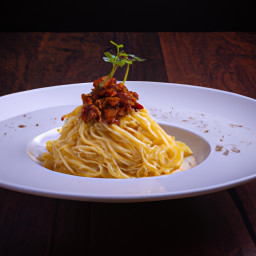
Serving Size: 4
Approximate Time
Prep
15 min
Cook
30 min
Total
45 min
Ingredients
U.S. measurements first, metric equivalents in parentheses. Conversions are approximate; oz means weight ounces, not fluid ounces.
1 lb (450 g) ground beef
1 can (28 oz (794 g)) crushed tomatoes
3 cloves garlic, minced
1 white onion, finely chopped
2 tbsp (30 ml) olive oil
Salt and pepper, to taste
1 tsp (5 ml) dried oregano
1 tsp (5 ml) dried basil
1 / 2 cup (120 ml) red wine (optional)
Spaghetti noodles, cooked according to package instructions
Grated Parmesan cheese (for serving)
Show original ingredient measurements
1 lb (450 g) ground beef
1 can (28 oz / 794 g) crushed tomatoes
3 cloves garlic, minced
1 white onion, finely chopped
2 tbsp (30 ml) olive oil
Salt and pepper, to taste
1 tsp dried oregano
1 tsp dried basil
1 / 2 cup (120 ml) red wine (optional)
Spaghetti noodles, cooked according to package instructions
Grated Parmesan cheese (for serving)
Instructions
1. Heat olive oil in a large skillet over medium heat. Add the chopped onion and minced garlic and sauté until the onion becomes translucent, about 3-4 minutes.
2. Add the ground beef to the skillet and cook until browned, breaking it apart with a wooden spoon. Drain excess fat if necessary.
3. Stir in the crushed tomatoes, wine (if using), oregano, and basil. Season with salt and pepper to taste. Bring the sauce to a simmer and let it cook for 20-30 minutes, allowing the flavors to meld.
4. While the sauce simmers, cook the spaghetti noodles according to the package instructions. Drain and set aside.
5. Serve the spaghetti topped with the Bolognese sauce and a sprinkle of grated Parmesan cheese.

---
Estimated Nutritional Information*
Per serving | Servings: 4
Calories: 405 kcal
Carbohydrates: 18.8 g
Protein: 24.7 g
Fat: 24.2 g
Saturated fat: 7.5 g
Cholesterol: 77 mg
Fiber: 4.5 g
Sugar: 10.1 g
Sodium: 446 mg
Potassium: 1008 mg
Calcium: 105 mg
Iron: 5.45 mg
Vitamin A: 27 µg RAE
Vitamin C: 21 mg
Vitamin D: 0.1 µg
Nutrition estimated: November 5, 2026
*Values are estimates based on USDA data and mathematical calculations. Actual values may vary. Where data are unavailable, those contributions are excluded. Calories, Carbohydrates, Protein, Fat, Saturated fat, Cholesterol, Fiber, Sugar, Sodium, Potassium, Calcium, Iron, Vitamin A, Vitamin C and Vitamin D are known subtotals. Missing contributions are unknown, not zero.