Katsudon (Pork Cutlet Rice Bowl)
Food safety reminder: Follow safe food-handling practices and use a food thermometer to verify safe internal cooking temperatures.
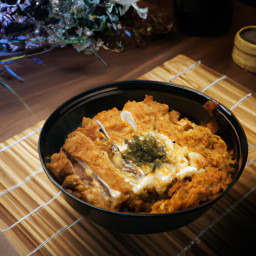
Serving Size: 2
Approximate Time
Prep
25 min
Cook
20 min
Total
45 min
Ingredients
U.S. measurements first, metric equivalents in parentheses. Conversions are approximate; oz means weight ounces, not fluid ounces.
2 cups (400 g) cooked short-grain rice (hot)
7 oz (200 g) ground pork
1 shallot (thinly sliced)
2 cloves garlic (minced)
1 tbsp (15 ml) vegetable oil
1 tbsp (15 ml) soy sauce
1 tbsp (15 ml) rice wine (or sake)
1 tsp (5 ml) sugar
1 tbsp (15 ml) doubanjiang (chili bean paste) or sambal oelek (adjust for spice)
2 tbsp (30 ml) water
1/2 medium onion (thinly sliced)
1 cup (240 ml) dashi stock (or low-sodium chicken stock)
3 tbsp (45 ml) soy sauce
2 tbsp (30 ml) mirin
4 large eggs (lightly beaten)
chopped scallions for garnish
beni shoga (pickled red ginger) optional
2 boneless pork loin chops (~4–6 oz (120–180 g) each)
salt and pepper
1/4 cup (60 ml) all-purpose flour
1 large egg (for breading)
3/4 cup (180 ml) panko breadcrumbs
vegetable oil for shallow/deep frying (enough for ~1/2 in (1–1.5 cm) depth)
Show original ingredient measurements
2 cups (400 g) cooked short-grain rice (hot)
200 g (7 oz) ground pork
1 shallot (thinly sliced)
2 cloves garlic (minced)
1 tbsp vegetable oil
1 tbsp soy sauce
1 tbsp rice wine (or sake)
1 tsp sugar
1 tbsp doubanjiang (chili bean paste) or sambal oelek (adjust for spice)
2 tbsp water
1/2 medium onion (thinly sliced)
1 cup dashi stock (or low-sodium chicken stock)
3 tbsp soy sauce
2 tbsp mirin
4 large eggs (lightly beaten)
chopped scallions for garnish
beni shoga (pickled red ginger) optional
2 boneless pork loin chops (~120–180 g / 4–6 oz each)
salt and pepper
1/4 cup all-purpose flour
1 large egg (for breading)
3/4 cup panko breadcrumbs
vegetable oil for shallow/deep frying (enough for ~1–1.5 cm / 1/2 in depth)
Instructions
U.S. measurements first, metric equivalents in parentheses. Conversions are approximate.
1. Make the Taiwanese-style minced pork topping (Lu-style minced pork): Heat 1 tbsp (15 ml) vegetable oil in a skillet over medium heat. Add the sliced shallot and cook until soft and translucent (2–3 minutes). Add minced garlic and stir for 30 seconds. Add ground pork and break it up; cook until no longer pink. Stir in soy sauce, rice wine, sugar, and doubanjiang. Add 2 tbsp (30 ml) water and reduce heat to medium-low. Simmer, stirring, until the mixture is glossy and slightly reduced, about 4–6 minutes. Keep warm on very low heat.
2. Prepare the tonkatsu (fried pork cutlet): Lightly score or pound the pork to about 1/3–1/2 in (1–1.2 cm) thickness if needed. Season both sides with salt and pepper. Set up three shallow dishes: flour, beaten egg, panko. Dredge each chop in flour, shake off excess, dip into beaten egg, then press into panko to coat well. Heat vegetable oil in a frying pan over medium-high until shimmering. Fry the cutlets until golden brown, about 3–4 minutes per side. Transfer to a wire rack or paper towel-lined plate to drain and rest for 2–3 minutes. Slice each cutlet into 5–6 strips.
3. Prepare the katsudon simmer (egg-and-broth stage): In a skillet large enough to hold the sliced cutlet, combine dashi (or stock), soy sauce, mirin, and sugar. Bring to a gentle simmer over medium heat. Add the sliced onion and simmer until softened, about 3–4 minutes. Lay the sliced tonkatsu on top of the simmered onions and broth. Reduce heat to low. Pour half of the lightly beaten eggs evenly over the cutlets and onion. Cover and cook until the egg is just set but still slightly runny, about 1–2 minutes.
4. Assemble the bowls: Divide the hot cooked rice between two bowls. Spoon a generous portion of the warm Taiwanese minced pork over the rice. Carefully slide the tonkatsu topped with onion and egg from the skillet onto the rice (one cutlet per bowl, with egg and onions). Spoon a little of the simmering sauce from the skillet over the bowl for flavor. Garnish with chopped scallions and a little beni shoga if using. Serve immediately.
Show original instructions
1. Make the Taiwanese-style minced pork topping (Lu-style minced pork): Heat 1 tbsp vegetable oil in a skillet over medium heat. Add the sliced shallot and cook until soft and translucent (2–3 minutes). Add minced garlic and stir for 30 seconds. Add ground pork and break it up; cook until no longer pink. Stir in soy sauce, rice wine, sugar, and doubanjiang. Add 2 tbsp water and reduce heat to medium-low. Simmer, stirring, until the mixture is glossy and slightly reduced, about 4–6 minutes. Keep warm on very low heat.
2. Prepare the tonkatsu (fried pork cutlet): Lightly score or pound the pork to about 1–1.2 cm (1/3–1/2 in) thickness if needed. Season both sides with salt and pepper. Set up three shallow dishes: flour, beaten egg, panko. Dredge each chop in flour, shake off excess, dip into beaten egg, then press into panko to coat well. Heat vegetable oil in a frying pan over medium-high until shimmering. Fry the cutlets until golden brown, about 3–4 minutes per side. Transfer to a wire rack or paper towel-lined plate to drain and rest for 2–3 minutes. Slice each cutlet into 5–6 strips.
3. Prepare the katsudon simmer (egg-and-broth stage): In a skillet large enough to hold the sliced cutlet, combine dashi (or stock), soy sauce, mirin, and sugar. Bring to a gentle simmer over medium heat. Add the sliced onion and simmer until softened, about 3–4 minutes. Lay the sliced tonkatsu on top of the simmered onions and broth. Reduce heat to low. Pour half of the lightly beaten eggs evenly over the cutlets and onion. Cover and cook until the egg is just set but still slightly runny, about 1–2 minutes.
4. Assemble the bowls: Divide the hot cooked rice between two bowls. Spoon a generous portion of the warm Taiwanese minced pork over the rice. Carefully slide the tonkatsu topped with onion and egg from the skillet onto the rice (one cutlet per bowl, with egg and onions). Spoon a little of the simmering sauce from the skillet over the bowl for flavor. Garnish with chopped scallions and a little beni shoga if using. Serve immediately.
Estimated Nutritional Information*
Per serving | Servings: 2
Calories: 1244 kcal
Carbohydrates: 121.6 g
Protein: 63.8 g
Fat: 52.5 g
Sodium: 2378 mg
Generated: 2026-11-06T05:01:29+00:00
*Values are estimates based on USDA data and mathematical calculations. Actual values may vary. Where data are unavailable, those contributions are excluded. Calories, Carbohydrates, Protein, Fat and Sodium are known subtotals. Missing contributions are unknown, not zero.