Entrée: France – Saumon Meunière aux Asperges Amandine (Pan-Fried Salmon with Almond Asparagus)
Food safety reminder: Follow safe food-handling practices and use a food thermometer to verify safe internal cooking temperatures.
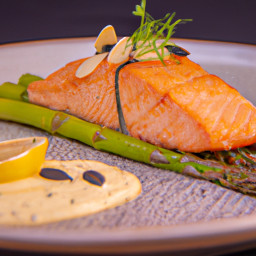
Serving Size: 4
Approximate Time
Prep
15 min
Cook
15 min
Total
30 min
Ingredients
4 salmon fillets, about 1 1/2 lb total (680 g total)
1 lb (450 g) asparagus
6 tbsp (90 g) salted butter, divided
1/2 cup (60 g) all-purpose flour, for dredging
1 lemon, juice and wedges
2 tbsp (8 g) fresh parsley, chopped
1/3 cup (35 g) sliced almonds
Salt and freshly ground black pepper to taste
1 tbsp (15 ml) olive oil
Instructions
U.S. measurements first, metric equivalents in parentheses. Conversions are approximate.
1. Season salmon with salt and pepper and lightly dredge both sides in flour, shaking off excess.
2. Heat 3 tbsp (45 ml) salted butter and olive oil in a large skillet over medium-high heat; add salmon and cook 3–4 minutes per side until golden brown and cooked through; transfer to warm plates.
3. Reduce heat, add remaining 1–2 tbsp (15 to 30 ml) salted butter to the skillet with lemon juice and parsley, spoon sauce over salmon.
4. Blanch asparagus in salted boiling water for 2 minutes, shock in ice water, then drain.
5. In a separate skillet, toast sliced almonds in 1 tbsp (15 ml) salted butter until golden, add asparagus, toss to heat through, season and serve alongside salmon.
Show original instructions
1. Season salmon with salt and pepper and lightly dredge both sides in flour, shaking off excess.
2. Heat 3 tbsp salted butter and olive oil in a large skillet over medium-high heat; add salmon and cook 3–4 minutes per side until golden brown and cooked through; transfer to warm plates.
3. Reduce heat, add remaining 1–2 tbsp salted butter to the skillet with lemon juice and parsley, spoon sauce over salmon.
4. Blanch asparagus in salted boiling water for 2 minutes, shock in ice water, then drain.
5. In a separate skillet, toast sliced almonds in 1 tbsp salted butter until golden, add asparagus, toss to heat through, season and serve alongside salmon.
Estimated Nutritional Information*
Per serving | Servings: 4
Calories: 677 kcal
Carbohydrates: 19.2 g
Protein: 41 g
Fat: 49.1 g
Saturated fat: 17.6 g
Cholesterol: 142 mg
Fiber: 4.3 g
Sugar: 2.9 g
Sodium: 249 mg
Potassium: 961 mg
Calcium: 80 mg
Iron: 4.24 mg
Vitamin A: 304 µg RAE
Vitamin C: 23.3 mg
Vitamin D: 18.7 µg
Nutrition estimated: November 5, 2026
*Values are estimates based on USDA data and mathematical calculations. Actual values may vary. Where data are unavailable, those contributions are excluded. Calories, Carbohydrates, Protein, Fat, Saturated fat, Cholesterol, Fiber, Sugar, Sodium, Potassium, Calcium, Iron, Vitamin A, Vitamin C and Vitamin D are known subtotals. Missing contributions are unknown, not zero.