Entrée: Italy – Italian Entree
Food safety reminder: Follow safe food-handling practices and use a food thermometer to verify safe internal cooking temperatures.
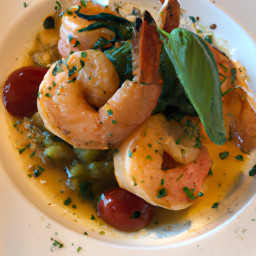
Serving Size: 4
Approximate Time
Prep
5 min
Cook
10 min
Total
15 min
Ingredients
1 lb (450 g) white shrimp, peeled and deveined
4 tbsp (60 g) butter
2 tbsp (30 ml) olive oil
4 cloves garlic, thinly sliced
1 / 2 cup (120 ml) dry white wine or seafood stock
Juice of 1 lemon
2 tbsp (8 g) chopped fresh parsley
Salt to taste
Freshly ground black pepper to taste
Linguine or crusty bread, for serving
Instructions
U.S. measurements first, metric equivalents in parentheses. Conversions are approximate.
1. Pat shrimp dry and season lightly with salt and pepper.
2. Heat olive oil and 2 tbsp (30 ml) butter in a large skillet over medium-high heat; add garlic and cook until fragrant but not browned, about 30 seconds.
3. Add shrimp in a single layer and sauté 1–2 minutes per side until just opaque; remove shrimp and set aside.
4. Pour in white wine (or stock) and lemon juice; bring to a simmer and reduce slightly, scraping up any browned bits.
5. Stir in remaining butter until melted, return shrimp to pan, toss with parsley, and adjust seasoning.
6. Serve immediately over cooked linguine or with crusty bread.
Show original instructions
1. Pat shrimp dry and season lightly with salt and pepper.
2. Heat olive oil and 2 tbsp butter in a large skillet over medium-high heat; add garlic and cook until fragrant but not browned, about 30 seconds.
3. Add shrimp in a single layer and sauté 1–2 minutes per side until just opaque; remove shrimp and set aside.
4. Pour in white wine (or stock) and lemon juice; bring to a simmer and reduce slightly, scraping up any browned bits.
5. Stir in remaining butter until melted, return shrimp to pan, toss with parsley, and adjust seasoning.
6. Serve immediately over cooked linguine or with crusty bread.
Estimated Nutritional Information*
Per serving | Servings: 4
Calories: 295 kcal
Carbohydrates: 2.7 g
Protein: 23.1 g
Fat: 19.5 g
Saturated fat: 8.8 g
Cholesterol: 213 mg
Sodium: 234 mg
Potassium: 357 mg
Calcium: 87 mg
Iron: 0.89 mg
Generated: 2026-11-05T19:36:52+00:00
*Values are estimates based on USDA data and mathematical calculations. Actual values may vary. Where data are unavailable, those contributions are excluded. Calories, Carbohydrates, Protein, Fat, Saturated fat, Cholesterol, Sodium, Potassium, Calcium and Iron are known subtotals. Missing contributions are unknown, not zero.