Entree: South Sudan – National Cuisine – Kisra (Fermented sorghum flatbread)
Food safety reminder: Follow safe food-handling practices and use a food thermometer to verify safe internal cooking temperatures.
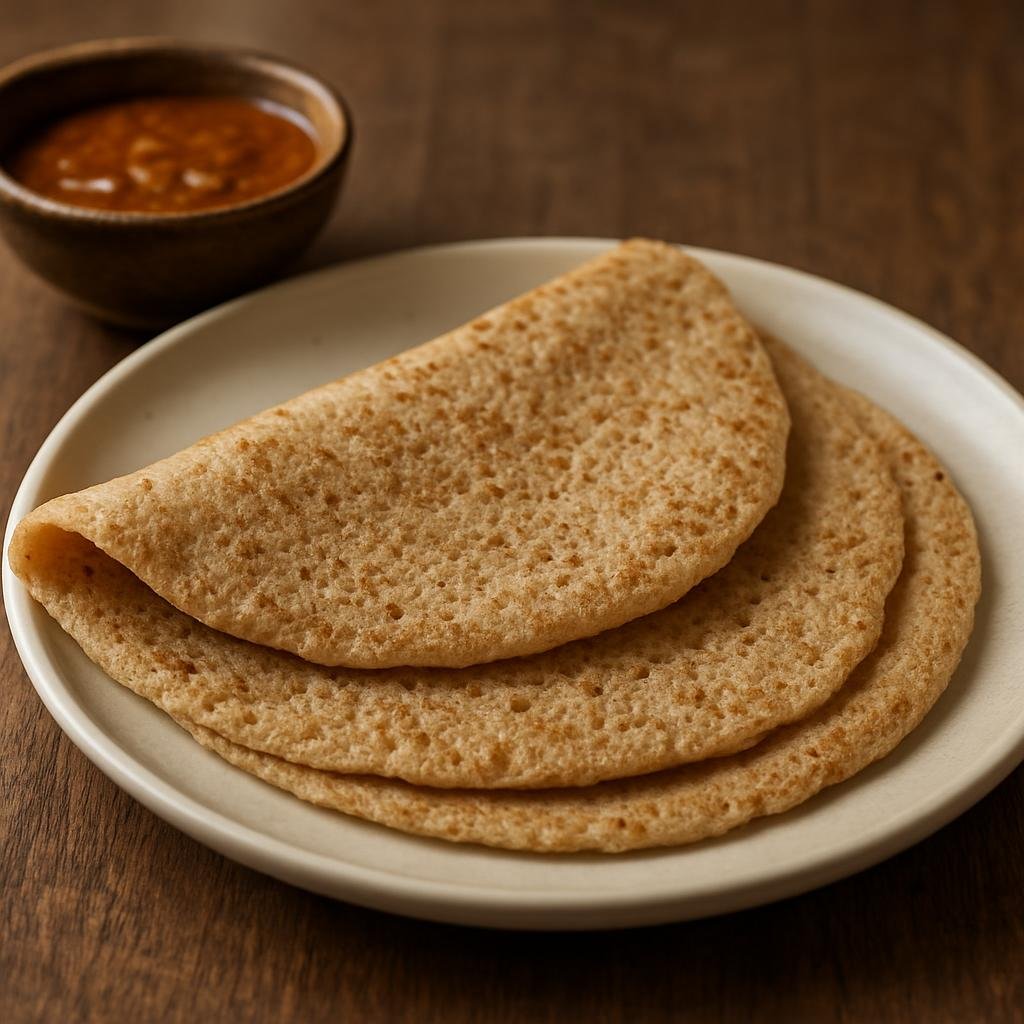
Serving Size: 6
Approximate Time
Prep
15 min
Cook
1 min
Additional
12 hrs
Total
12 hrs 15 min
Ingredients
- 3 cups (360 g) sorghum flour
- 3 1/2 cups (840 ml) water, divided
- 1/2 cup (60 g) all-purpose wheat flour (optional, helps binding and fermentation)
- 1 tsp (6 g) fine salt
- 1/4 tsp (1 g) active dry yeast (optional, to speed fermentation)
- 1/4 cup (60 ml) fermented sorghum starter or reserved batter from previous batch (optional, for authentic sourness)
- 2 tbsp (30 ml) vegetable oil or neutral oil for cooking
Instructions
U.S. measurements first, metric equivalents in parentheses. Conversions are approximate.
1. Step 1: In a large mixing bowl, whisk together sorghum flour, optional wheat flour, and salt. Gradually add 3 cups (720 ml) of the water, stirring to make a smooth, thin batter with the consistency of heavy cream; add more water from the remainder if necessary.
2. Step 2: If using, stir in active dry yeast and/or 1/4 cup (60 ml) fermented starter. Cover the bowl with a clean cloth and leave at room temperature to ferment until bubbly and tangy, typically 12–24 hours depending on ambient temperature (longer in cool conditions).
3. Step 3: After fermentation, stir the batter. Adjust thickness with the remaining water so it pours thinly but still coats the back of a spoon — like a crepe batter. Taste and adjust salt if needed.
4. Step 4: Heat a nonstick skillet or traditional saj/griddle over medium-high heat until hot; wipe lightly with a paper towel dipped in oil so the surface is very lightly oiled.
5. Step 5: Pour or ladle a thin layer of batter onto the hot surface, tilting and rotating the pan immediately to spread into a very thin circle (about 8–10 in (20–25 cm)). Cook until the surface sets and small holes form and the edges lift, about 1–2 minutes. Kisra is usually cooked on one side only; flip briefly if you prefer both sides cooked, about 10–20 seconds.
6. Step 6: Transfer cooked kisra to a clean cloth or stack on a plate, covering to keep soft. Repeat with remaining batter, re-oiling the pan as needed.
7. Step 7: Serve warm as the base for stews (e.g., mullah, meat or vegetable stews), tearing pieces to scoop up sauces. If not using immediately, kisra keeps covered at room temperature for a day or refrigerated for a few days; reheat briefly on a hot pan before serving.
Show original instructions
1. Step 1: In a large mixing bowl, whisk together sorghum flour, optional wheat flour, and salt. Gradually add 3 cups (720 ml) of the water, stirring to make a smooth, thin batter with the consistency of heavy cream; add more water from the remainder if necessary.
2. Step 2: If using, stir in active dry yeast and/or 1/4 cup (60 ml) fermented starter. Cover the bowl with a clean cloth and leave at room temperature to ferment until bubbly and tangy, typically 12–24 hours depending on ambient temperature (longer in cool conditions).
3. Step 3: After fermentation, stir the batter. Adjust thickness with the remaining water so it pours thinly but still coats the back of a spoon — like a crepe batter. Taste and adjust salt if needed.
4. Step 4: Heat a nonstick skillet or traditional saj/griddle over medium-high heat until hot; wipe lightly with a paper towel dipped in oil so the surface is very lightly oiled.
5. Step 5: Pour or ladle a thin layer of batter onto the hot surface, tilting and rotating the pan immediately to spread into a very thin circle (about 8–10 in / 20–25 cm). Cook until the surface sets and small holes form and the edges lift, about 1–2 minutes. Kisra is usually cooked on one side only; flip briefly if you prefer both sides cooked, about 10–20 seconds.
6. Step 6: Transfer cooked kisra to a clean cloth or stack on a plate, covering to keep soft. Repeat with remaining batter, re-oiling the pan as needed.
7. Step 7: Serve warm as the base for stews (e.g., mullah, meat or vegetable stews), tearing pieces to scoop up sauces. If not using immediately, kisra keeps covered at room temperature for a day or refrigerated for a few days; reheat briefly on a hot pan before serving.
Estimated Nutritional Information*
Per serving | Servings: 6
Calories: 295 kcal
Carbohydrates: 53.5 g
Protein: 7.3 g
Fat: 5.2 g
Saturated fat: 0.8 g
Fiber: 1.9 g
Sugar: 0.2 g
Sodium: 395 mg
Potassium: 77 mg
Calcium: 15 mg
Iron: 3.26 mg
Vitamin C: 0 mg
Generated: 2026-11-05T19:38:09+00:00
*Values are estimates based on USDA data and mathematical calculations. Actual values may vary. Where data are unavailable, those contributions are excluded. Calories, Carbohydrates, Protein, Fat, Saturated fat, Fiber, Sugar, Sodium, Potassium, Calcium, Iron and Vitamin C are known subtotals. Missing contributions are unknown, not zero.