Entree: Bouvet Island – Central Culinary Region – Smoked Eider Duck (Smoked sea duck cured in a brine and finished over aromatic wood smoke)
Food safety reminder: Follow safe food-handling practices and use a food thermometer to verify safe internal cooking temperatures.
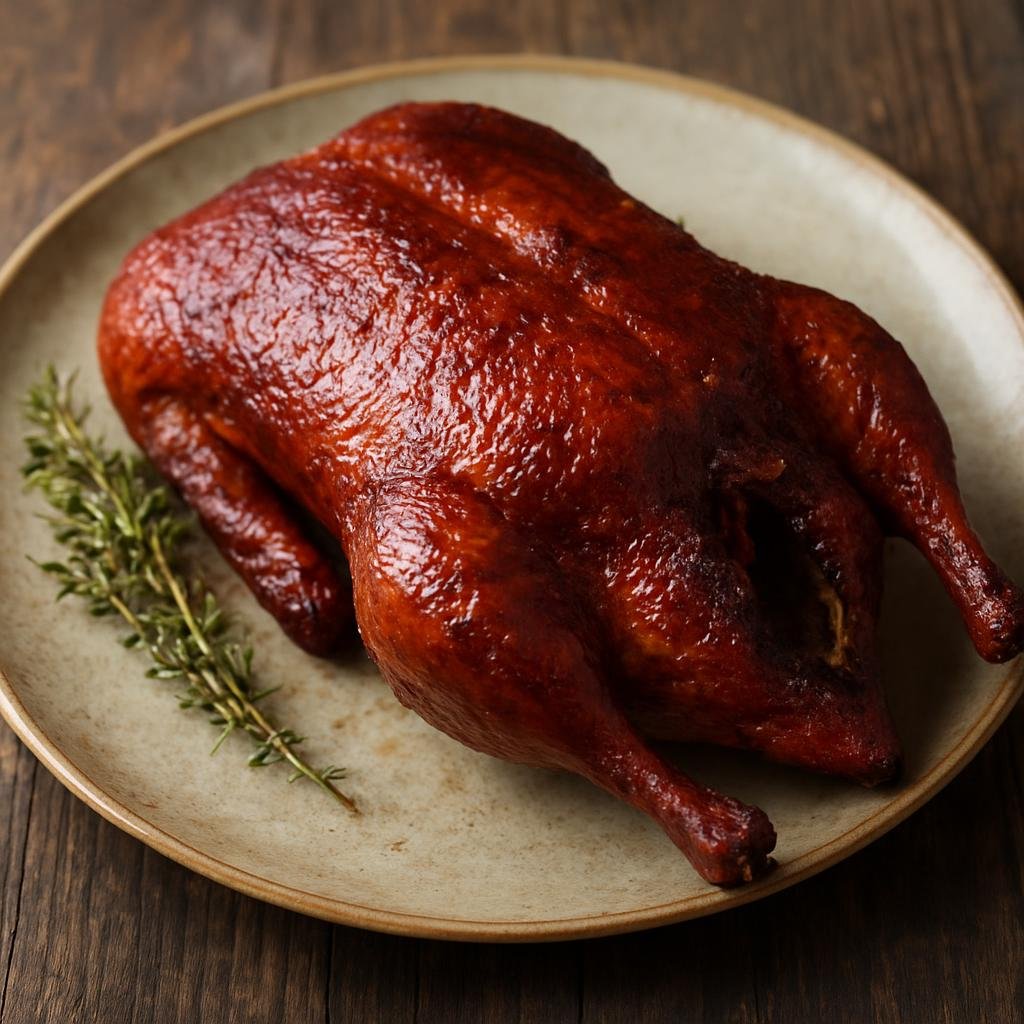
Serving Size: 2
Approximate Time
Prep
30 min
Cook
1 hr 30 min
Additional
8 hrs
Total
8 hrs 40 min
Ingredients
U.S. measurements first, metric equivalents in parentheses. Conversions are approximate; oz means weight ounces, not fluid ounces.
- 1 whole eider duck, about 2 lb (900 g) dressed weight
- 4 cups (960 ml) water
- 1/2 cup (120 g) coarse kosher salt
- 1/4 cup (50 g) brown sugar
- 1 tbsp (8 g) crushed juniper berries
- 1 tbsp (6 g) whole black peppercorns
- 3 bay leaves
- 2 cloves garlic, smashed
- 1 small onion, quartered, about 4 oz (115 g)
- 2 tbsp (30 ml) white vinegar
- 2 tbsp (30 g) unsalted butter, softened
- 1 tbsp (15 ml) chopped fresh thyme (or 1 tsp (1 g) dried thyme)
- 1 tsp (5 g) freshly cracked black pepper
- 1 tsp (5 g) sea salt (for final rub)
- 2 cups (approx. 50 g) birch or juniper wood chips, soaked 30 minutes
- 1 lemon, halved, for serving
- 2 tbsp (8 g) chopped fresh parsley, optional garnish
Show original ingredient measurements
- 1 whole eider duck, about 2 lb (900 g) dressed weight
- 4 cups (960 ml) water
- 1/2 cup (120 g) coarse kosher salt
- 1/4 cup (50 g) brown sugar
- 1 tbsp (8 g) crushed juniper berries
- 1 tbsp (6 g) whole black peppercorns
- 3 bay leaves
- 2 cloves garlic, smashed
- 1 small onion, quartered, about 4 oz (115 g)
- 2 tbsp (30 ml) white vinegar
- 2 tbsp (30 g) unsalted butter, softened
- 1 tbsp (15 ml) chopped fresh thyme (or 1 tsp / 1 g dried thyme)
- 1 tsp (5 g) freshly cracked black pepper
- 1 tsp (5 g) sea salt (for final rub)
- 2 cups (approx. 50 g) birch or juniper wood chips, soaked 30 minutes
- 1 lemon, halved, for serving
- 2 tbsp (8 g) chopped fresh parsley, optional garnish
Instructions
1. Prepare the brine: in a nonreactive pot combine 4 cups (960 ml) water, 1/2 cup (120 g) kosher salt, 1/4 cup (50 g) brown sugar, crushed juniper berries, black peppercorns, bay leaves, smashed garlic, quartered onion, and 2 tbsp (30 ml) white vinegar. Heat just until salt and sugar dissolve, then cool completely.
2. Brine the duck: submerge the duck in the cooled brine, weighted if necessary, and refrigerate 6–8 hours (up to overnight) for a firm, seasoned flesh.
3. Rinse and dry: remove the duck from the brine, rinse thoroughly under cold water, and pat dry. Place uncovered on a rack in the refrigerator 1–2 hours to dry and form a light pellicle; this helps smoke adhere.
4. Prepare the rub and smoker: mix softened butter, chopped thyme, cracked black pepper, and 1 tsp (5 g) sea salt. Preheat your smoker to a low smoking range (cold smoke 80–100°F / 27–38°C with short finishing heat, or hot smoke 175–200°F / 80–95°C for a single-step cook). If using a stovetop or kettle smoker, arrange soaked wood chips according to the manufacturer’s directions.
5. Apply rub and smoke: loosen the skin slightly and rub a portion of the butter mixture under the skin and the rest over the skin. Place the duck breast-side up in the smoker and smoke with birch or juniper chips until the skin is golden and the internal temperature at the thickest part of the breast reaches 165°F (74°C). Hot smoking typically takes 1 to 1.5 hours for a small duck; adjust time for your equipment.
6. Rest and finish: remove the duck from the smoker and tent loosely with foil. Let rest 10–15 minutes before carving to allow juices to redistribute.
7. Serve: carve and squeeze lemon over slices, garnish with chopped parsley if desired, and serve immediately with simple boiled potatoes or dark rye bread to complement the smoky, briny flavor.
Estimated Nutritional Information*
Per serving | Servings: 2
Calories: 476 kcal
Carbohydrates: 42.4 g
Protein: 30.3 g
Fat: 22 g
Saturated fat: 11.4 g
Cholesterol: 150 mg
Fiber: 4.5 g
Sodium: 24375 mg
Potassium: 739 mg
Calcium: 159 mg
Iron: 5.71 mg
Vitamin A: 161 µg RAE
Vitamin C: 39.1 mg
Vitamin D: 0.2 µg
Generated: 2026-11-06T05:27:33+00:00
*Values are estimates based on USDA data and mathematical calculations. Actual values may vary. Where data are unavailable, those contributions are excluded. Calories, Carbohydrates, Protein, Fat, Saturated fat, Cholesterol, Fiber, Sodium, Potassium, Calcium, Iron, Vitamin A, Vitamin C and Vitamin D are known subtotals. Missing contributions are unknown, not zero.