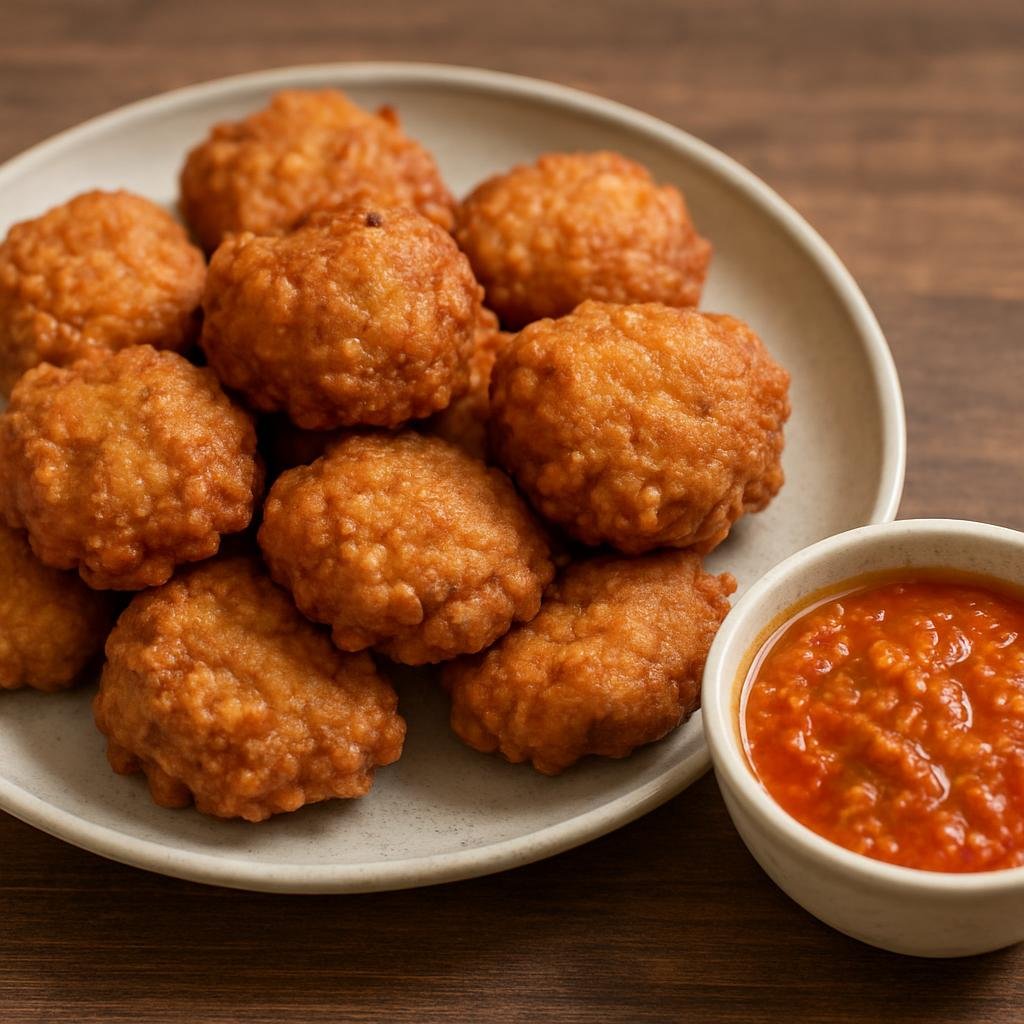
Entree: Niger – Kuli Kuli with Sauce (Deep-fried seasoned peanut cakes served with a spicy tomato-peanut sauce)
Food safety reminder: Follow safe food-handling practices and use a food thermometer to verify safe internal cooking temperatures.
Ingredients
U.S. measurements first, metric equivalents in parentheses. Conversions are approximate; oz means weight ounces, not fluid ounces.
- 2 cups (300 g) roasted unsalted peanuts
- 1/2 tsp (3 g) fine salt, plus more to taste
- 1/2 tsp (1 g) ground cayenne pepper
- 2 tbsp (30 ml) peanut oil mixed into the paste
- 1/2 cup (120 ml) peanut oil for frying
- 1/4 cup (30 g) all-purpose flour (optional binder)
- 1-2 tbsp (15-30 ml) water as needed to adjust paste

Sauce
- 2 tbsp (30 ml) peanut oil
- 1 medium onion, finely chopped (approx. 6 oz (170 g))
- 3 cloves garlic, minced (approx. 5/16 oz (9 g))
- 1 tbsp (6 g) fresh grated ginger
- 1 scotch bonnet or habanero pepper, seeded and minced (approx. 0.35 oz (10 g)) optional or to taste
- 2 medium tomatoes, chopped (approx. 10 oz (300 g))
- 2 tbsp (30 g) tomato paste
- 1 cup (240 ml) water or vegetable/chicken stock
- 1 tbsp (15 ml) lime juice
- 1 tsp (4 g) sugar (optional, to balance acidity)
- Salt to taste
- 2 tbsp (8 g) chopped fresh cilantro for garnish

To serve
- Cooked white rice or millet, 4 cups (960 g) cooked total (optional)
Show original ingredient measurements
- 2 cups (300 g) roasted unsalted peanuts
- 1/2 tsp (3 g) fine salt, plus more to taste
- 1/2 tsp (1 g) ground cayenne pepper
- 2 tbsp (30 ml) peanut oil mixed into the paste
- 1/2 cup (120 ml) peanut oil for frying
- 1/4 cup (30 g) all-purpose flour (optional binder)
- 1-2 tbsp (15-30 ml) water as needed to adjust paste

Sauce
- 2 tbsp (30 ml) peanut oil
- 1 medium onion, finely chopped (approx. 6 oz / 170 g)
- 3 cloves garlic, minced (approx. 9 g)
- 1 tbsp (6 g) fresh grated ginger
- 1 scotch bonnet or habanero pepper, seeded and minced (approx. 10 g) optional or to taste
- 2 medium tomatoes, chopped (approx. 10 oz / 300 g)
- 2 tbsp (30 g) tomato paste
- 1 cup (240 ml) water or vegetable/chicken stock
- 1 tbsp (15 ml) lime juice
- 1 tsp (4 g) sugar (optional, to balance acidity)
- Salt to taste
- 2 tbsp (8 g) chopped fresh cilantro for garnish

To serve
- Cooked white rice or millet, 4 cups (960 g) cooked total (optional)
Instructions
U.S. measurements first, metric equivalents in parentheses. Conversions are approximate.
1. Prepare the peanut paste: pulse the roasted peanuts in a food processor until coarsely ground, then continue to process until a thick, sticky paste forms. Scrape down the bowl, add 1/2 tsp (2.5 ml) salt, 1/2 tsp (2.5 ml) cayenne, 2 tbsp (30 ml) peanut oil and the optional flour if the paste is too oily; pulse until mixture holds together but is not pasty. Add 1-2 tbsp (15 to 30 ml) water only if needed to help bind.
2. Form and chill: wet your hands and shape the paste into 12–16 small balls or oval cakes about 1.5 in (4 cm) each. Place on a tray and chill in the refrigerator 15 minutes to help them firm up.
3. Fry the kuli kuli: heat 1/2 cup (120 ml) peanut oil in a deep skillet or pot to 350°F (175°C). Fry the kuli kuli in batches, turning occasionally, until deeply golden and crisp, about 3–4 minutes per batch. Drain on paper towels and keep warm.
4. Make the sauce: in a medium saucepan heat 2 tbsp (30 ml) peanut oil over medium heat. Add the chopped onion and cook until translucent, 4–5 minutes. Add garlic, ginger, and minced hot pepper and cook 1 minute until fragrant.
5. Add tomatoes and tomato paste, stirring to combine; cook 3–4 minutes until tomatoes begin to break down. Pour in 1 cup (240 ml) water or stock, bring to a simmer, and reduce heat to medium-low. Simmer 8–10 minutes to meld flavors.
6. Finish the sauce: taste and add lime juice, sugar if using, and salt to balance. If you prefer a smoother sauce, blend briefly with an immersion blender or in a countertop blender until slightly smooth but still textured.
7. Serve: arrange kuli kuli on a platter and spoon warm sauce over or serve sauce in a bowl alongside. Garnish with chopped cilantro and serve with cooked rice or millet if desired.
Show original instructions
1. Prepare the peanut paste: pulse the roasted peanuts in a food processor until coarsely ground, then continue to process until a thick, sticky paste forms. Scrape down the bowl, add 1/2 tsp salt, 1/2 tsp cayenne, 2 tbsp peanut oil and the optional flour if the paste is too oily; pulse until mixture holds together but is not pasty. Add 1-2 tbsp water only if needed to help bind.
2. Form and chill: wet your hands and shape the paste into 12–16 small balls or oval cakes about 1.5 in (4 cm) each. Place on a tray and chill in the refrigerator 15 minutes to help them firm up.
3. Fry the kuli kuli: heat 1/2 cup (120 ml) peanut oil in a deep skillet or pot to 350°F (175°C). Fry the kuli kuli in batches, turning occasionally, until deeply golden and crisp, about 3–4 minutes per batch. Drain on paper towels and keep warm.
4. Make the sauce: in a medium saucepan heat 2 tbsp (30 ml) peanut oil over medium heat. Add the chopped onion and cook until translucent, 4–5 minutes. Add garlic, ginger, and minced hot pepper and cook 1 minute until fragrant.
5. Add tomatoes and tomato paste, stirring to combine; cook 3–4 minutes until tomatoes begin to break down. Pour in 1 cup (240 ml) water or stock, bring to a simmer, and reduce heat to medium-low. Simmer 8–10 minutes to meld flavors.
6. Finish the sauce: taste and add lime juice, sugar if using, and salt to balance. If you prefer a smoother sauce, blend briefly with an immersion blender or in a countertop blender until slightly smooth but still textured.
7. Serve: arrange kuli kuli on a platter and spoon warm sauce over or serve sauce in a bowl alongside. Garnish with chopped cilantro and serve with cooked rice or millet if desired.
Per serving | Servings: 4
Generated: 2026-11-05T19:42:31+00:00
*Values are estimates based on USDA data and mathematical calculations. Actual values may vary. Where data are unavailable, those contributions are excluded. Calories, Carbohydrates, Protein, Fat, Saturated fat, Fiber, Sugar, Sodium, Potassium, Calcium, Iron, Vitamin A and Vitamin C are known subtotals. Missing contributions are unknown, not zero.