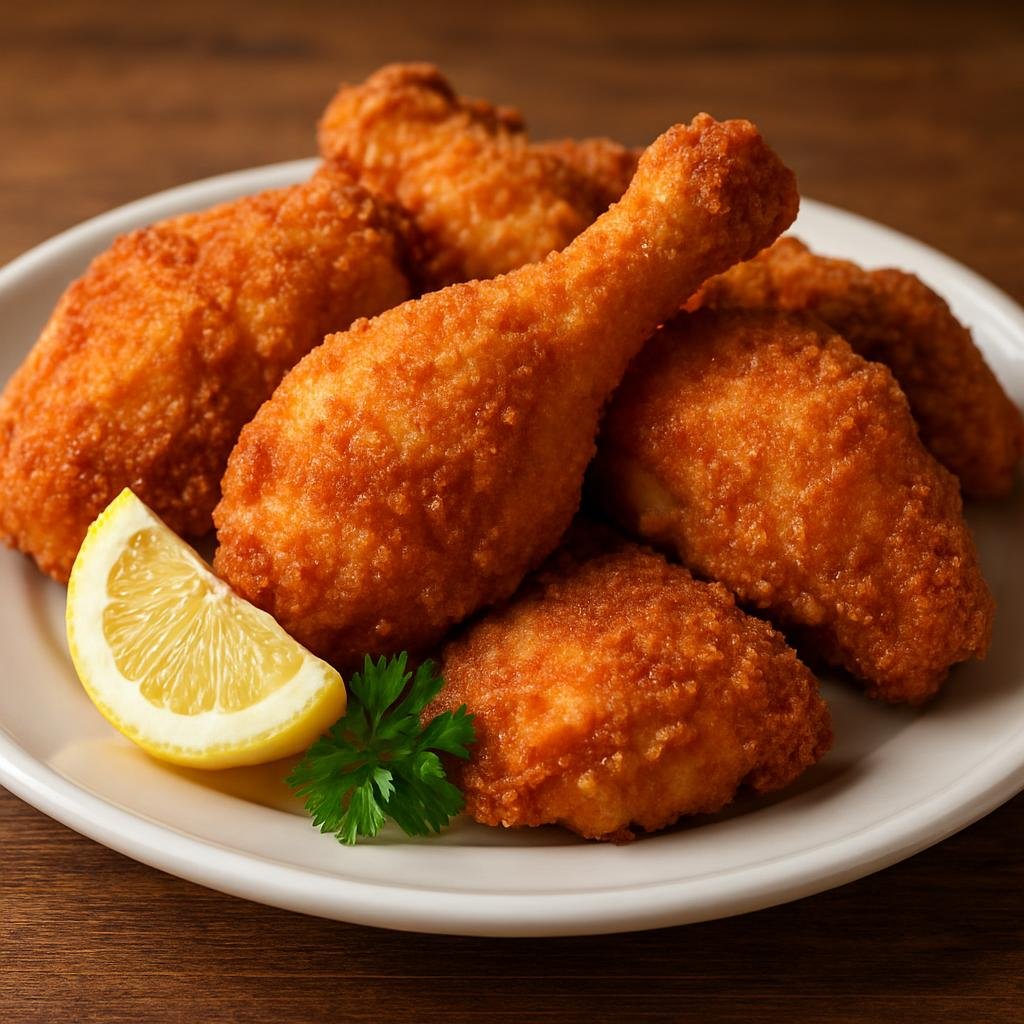
Entree: Austria – Salzburg & Alpine Austria – Backhendl (Crispy breaded and deep-fried chicken pieces, a traditional Austrian preparation)
Food safety reminder: Follow safe food-handling practices and use a food thermometer to verify safe internal cooking temperatures.
Ingredients
U.S. measurements first, metric equivalents in parentheses. Conversions are approximate; oz means weight ounces, not fluid ounces.
- 1 small fryer chicken, cut into 8 pieces, approx. 2.5 lb (1.1 kg)
- 1 cup (125 g) all-purpose flour
- 1 tsp (5 g) fine salt, plus more to taste
- 1/2 tsp (2 g) freshly ground black pepper
- 1 tsp (2.5 g) sweet paprika (optional)
- 3 large eggs, beaten (about 5 1/4 oz (150 g))
- 1/4 cup (60 ml) milk
- 2 cups (200 g) fresh breadcrumbs (preferably day-old white bread)
- 2 tbsp (8 g) chopped fresh parsley
- 2 cups (480 ml) lard, clarified butter, or neutral frying oil (enough for shallow-deep frying)
- Lemon wedges, for serving
Show original ingredient measurements
- 1 small fryer chicken, cut into 8 pieces, approx. 2.5 lb (1.1 kg)
- 1 cup (125 g) all-purpose flour
- 1 tsp (5 g) fine salt, plus more to taste
- 1/2 tsp (2 g) freshly ground black pepper
- 1 tsp (2.5 g) sweet paprika (optional)
- 3 large eggs, beaten (about 150 g)
- 1/4 cup (60 ml) milk
- 2 cups (200 g) fresh breadcrumbs (preferably day-old white bread)
- 2 tbsp (8 g) chopped fresh parsley
- 2 cups (480 ml) lard, clarified butter, or neutral frying oil (enough for shallow-deep frying)
- Lemon wedges, for serving
Instructions
U.S. measurements first, metric equivalents in parentheses. Conversions are approximate.
1. Pat the chicken pieces dry with paper towels and season all over with 1 tsp (5 ml) salt and 1/2 tsp (2.5 ml) pepper. If using paprika, sprinkle it lightly over the chicken and rub to coat.
2. Set up a breading station: one shallow bowl with flour, one with beaten eggs mixed with milk, and one with breadcrumbs mixed with chopped parsley.
3. Working one piece at a time, dredge the chicken in flour, shake off excess, submerge in the egg wash, then press into the breadcrumbs until well coated. Place coated pieces on a wire rack and rest 10–15 minutes to set the crust.
4. Heat the lard or oil in a large heavy skillet or deep fryer to 330–350°F (165–175°C). There should be enough fat to allow the pieces to float slightly for even browning.
5. Fry the chicken in batches, skin-side down first, until deep golden brown and cooked through, about 10–14 minutes per batch depending on piece size, turning once halfway. Maintain oil temperature between 320–350°F (160–175°C).
6. Transfer fried pieces to a rack or paper towel–lined tray and rest 5 minutes. Sprinkle with a little extra salt to taste.
7. Serve immediately with lemon wedges and extra chopped parsley alongside boiled potatoes or a simple green salad if desired.
Show original instructions
1. Pat the chicken pieces dry with paper towels and season all over with 1 tsp salt and 1/2 tsp pepper. If using paprika, sprinkle it lightly over the chicken and rub to coat.
2. Set up a breading station: one shallow bowl with flour, one with beaten eggs mixed with milk, and one with breadcrumbs mixed with chopped parsley.
3. Working one piece at a time, dredge the chicken in flour, shake off excess, submerge in the egg wash, then press into the breadcrumbs until well coated. Place coated pieces on a wire rack and rest 10–15 minutes to set the crust.
4. Heat the lard or oil in a large heavy skillet or deep fryer to 330–350°F (165–175°C). There should be enough fat to allow the pieces to float slightly for even browning.
5. Fry the chicken in batches, skin-side down first, until deep golden brown and cooked through, about 10–14 minutes per batch depending on piece size, turning once halfway. Maintain oil temperature between 320–350°F (160–175°C).
6. Transfer fried pieces to a rack or paper towel–lined tray and rest 5 minutes. Sprinkle with a little extra salt to taste.
7. Serve immediately with lemon wedges and extra chopped parsley alongside boiled potatoes or a simple green salad if desired.
Per serving | Servings: 4
Nutrition estimated: November 6, 2026
*Values are estimates based on USDA data and mathematical calculations. Actual values may vary. Where data are unavailable, those contributions are excluded. Calories, Carbohydrates, Protein, Fat, Saturated fat, Cholesterol, Fiber, Sugar, Sodium, Potassium, Calcium, Iron, Vitamin A and Vitamin C are known subtotals. Missing contributions are unknown, not zero.