Entree: Indonesia – Bali – Rujak Kuah Pindang (Balinese fruit-and-vegetable rujak served in a tangy fish-based broth)
Food safety reminder: Follow safe food-handling practices and use a food thermometer to verify safe internal cooking temperatures.
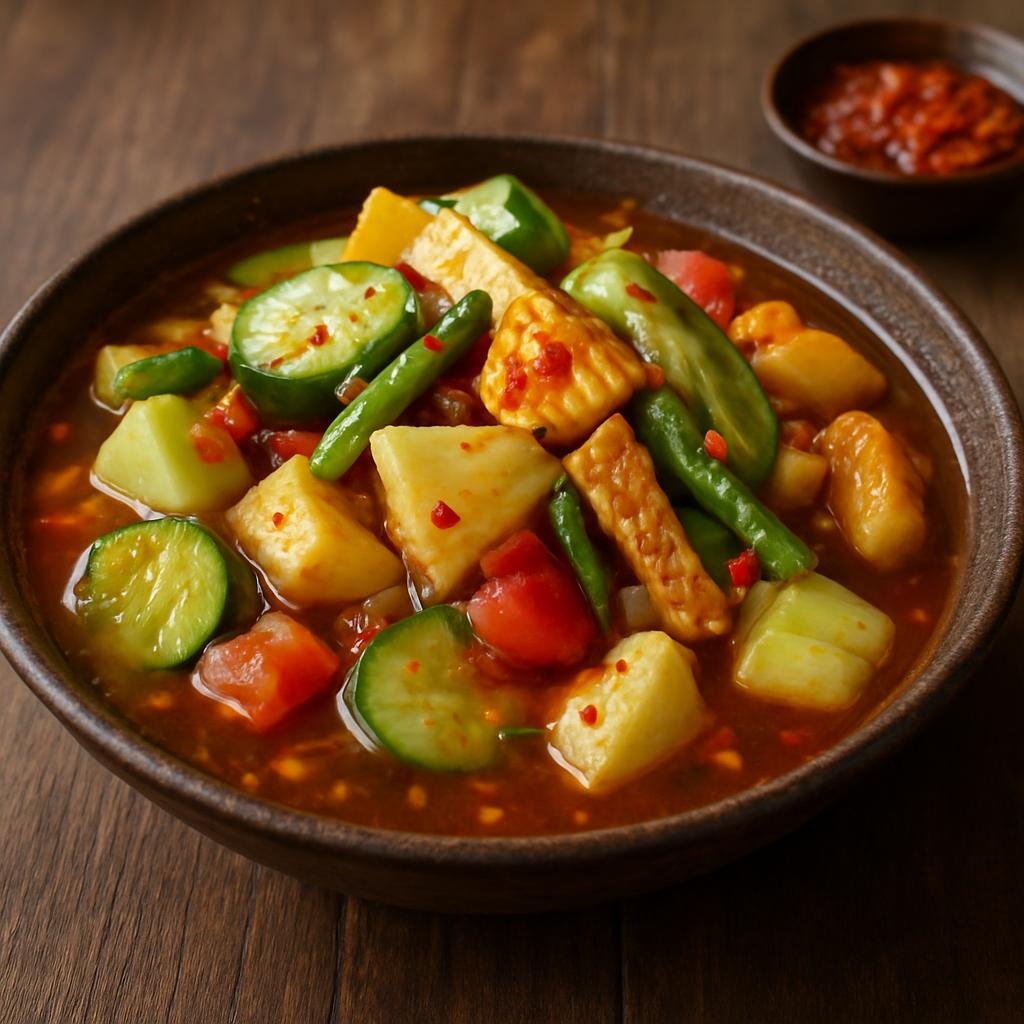
Serving Size: 4
Approximate Time
Prep
25 min
Cook
16 min
Total
41 min
Ingredients
U.S. measurements first, metric equivalents in parentheses. Conversions are approximate; oz means weight ounces, not fluid ounces.
1 lb (450 g; about 1 fish) pindang fish, selecting mackerel prepared as pindang for this rewrite; alternatively, use firm cleaned whole mackerel as specified. (estimated edible portion: 9 7/8 oz (280 g))
6 cups (1.4 L) water for the broth.
3 tbsp (45 ml) tamarind paste, diluted in 1/4 cup (60 ml) warm water.
3 tbsp (45 ml) grated palm sugar (brown sugar is an alternative).
6–8 bird’s-eye chilies, to taste.
3 medium shallots, peeled.
2 cloves garlic, peeled as needed.
1 tsp (5 g) toasted shrimp paste (terasi).
1/2 tsp (3 g) salt, plus more to taste.
2 tbsp (30 ml) kecap manis (sweet soy sauce), or use 1 tbsp (15 ml) for a less-sweet broth.
1 tsp (5 ml) fish sauce, optional.
1 cup (100 g) pineapple, cut into bite-size wedges.
1 cup (120 g) green mango, peeled and thinly sliced.
1 cup (120 g) jicama, julienned (selected from the listed alternatives; young papaya is an alternative). (estimated edible portion: 4 1/4 oz (120 g))
1 cup (120 g) cucumber, seeded and sliced.
1 cup (120 g) trimmed bean sprouts.
4–6 fried tofu cubes, about 8 oz (225 g) total, optional. (estimated edible portion: 7 7/8 oz (225 g))
2 tbsp (30 g) roasted peanuts, coarsely crushed, for garnish.
2 tbsp (6 g) fried shallots, for garnish.
2 tbsp (30 ml) vegetable oil, for sautéing the spice paste.
Lime wedges, for serving. (estimated edible portion: 1 1/16 oz (30 g))
Show original ingredient measurements
1 lb (450 g; about 1 fish) pindang fish, selecting mackerel prepared as pindang for this rewrite; alternatively, use firm cleaned whole mackerel as specified. (estimated edible portion: 280 g)
6 cups (1.4 L) water for the broth.
3 tbsp (45 ml) tamarind paste, diluted in 1/4 cup (60 ml) warm water.
3 tbsp (45 ml) grated palm sugar (brown sugar is an alternative).
6–8 bird’s-eye chilies, to taste.
3 medium shallots, peeled.
2 cloves garlic, peeled as needed.
1 tsp (5 g) toasted shrimp paste (terasi).
1/2 tsp (3 g) salt, plus more to taste.
2 tbsp (30 ml) kecap manis (sweet soy sauce), or use 1 tbsp (15 ml) for a less-sweet broth.
1 tsp (5 ml) fish sauce, optional.
1 cup (100 g) pineapple, cut into bite-size wedges.
1 cup (120 g) green mango, peeled and thinly sliced.
1 cup (120 g) jicama, julienned (selected from the listed alternatives; young papaya is an alternative). (estimated edible portion: 120 g)
1 cup (120 g) cucumber, seeded and sliced.
1 cup (120 g) trimmed bean sprouts.
4–6 fried tofu cubes, about 8 oz (225 g) total, optional. (estimated edible portion: 225 g)
2 tbsp (30 g) roasted peanuts, coarsely crushed, for garnish.
2 tbsp (6 g) fried shallots, for garnish.
2 tbsp (30 ml) vegetable oil, for sautéing the spice paste.
Lime wedges, for serving. (estimated edible portion: 30 g)
Instructions
1. Put the pindang mackerel in a pot with 6 cups (1.4 L) water. Bring to a gentle simmer and cook until just cooked through, about 8–10 minutes. Lift out the fish and reserve the broth. When cool enough to handle, remove skin and bones and flake the fish; set aside.
2. Grind the bird’s-eye chilies, peeled shallots, garlic, and toasted shrimp paste to a coarse paste using a mortar and pestle or small food processor.
3. Heat the vegetable oil in a small skillet. Add the spice paste and sauté briefly until fragrant. Stir in the palm sugar, tamarind paste diluted in warm water, and kecap manis. Cook and stir until the sugar dissolves and the mixture becomes saucy; remove from the heat.
4. Strain the reserved fish broth into a clean pot and bring it to a gentle simmer. Stir in the prepared sauce and flaked fish. Add the optional fish sauce, if using, and season with the stated salt and additional salt or sweetness as needed. Keep the broth warm without boiling.
5. In a large bowl, combine the pineapple, green mango, jicama, cucumber, and bean sprouts. Fold in the optional fried tofu cubes, if using.
6. Divide the fruit and vegetable mixture among shallow bowls. Ladle warm broth and flaked fish over the portions, coating the ingredients lightly while keeping them crisp.
7. Garnish with crushed roasted peanuts and fried shallots. Serve immediately with lime wedges.
Estimated Nutritional Information*
Per serving | Servings: 4
Calories: 517 kcal
Carbohydrates: 58.2 g
Protein: 19.2 g
Fat: 24.7 g
Saturated fat: 4.2 g
Sodium: 865 mg
Nutrition estimated: November 6, 2026
*Values are estimates based on USDA data and mathematical calculations. Actual values may vary. Where data are unavailable, those contributions are excluded. Sodium is a known subtotal. Missing contributions are unknown, not zero.