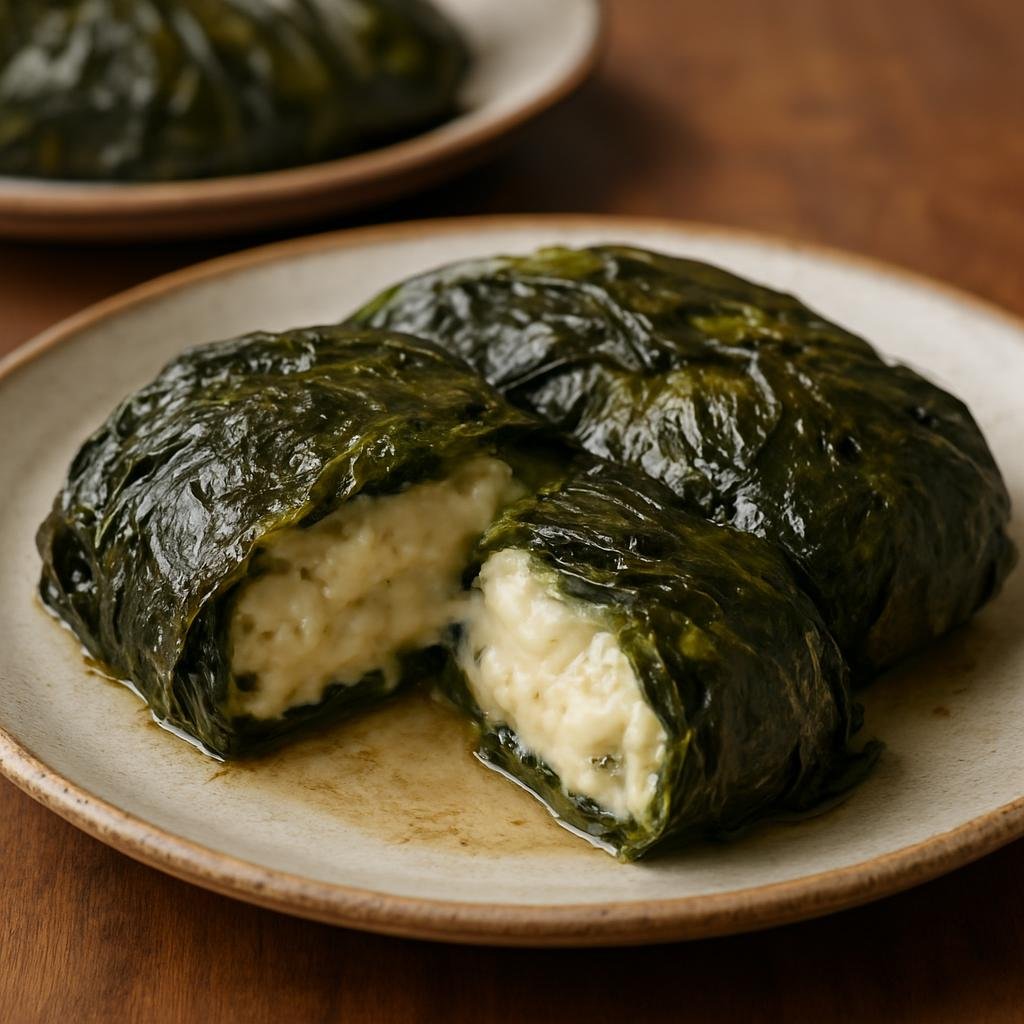
Entree: Wallis and Futuna – Southern Culinary Region – Palusami (Taro leaves filled with rich coconut cream and aromatics, wrapped and baked until tender)
Food safety reminder: Follow safe food-handling practices and use a food thermometer to verify safe internal cooking temperatures.
Ingredients
U.S. measurements first, metric equivalents in parentheses. Conversions are approximate; oz means weight ounces, not fluid ounces.
- 12 large taro leaves (about 12 3/8 to 14 1/8 oz (350–400 g))
- 2 cups (480 ml) coconut cream
- 1 cup (240 ml) coconut milk
- 1 large yellow onion, finely chopped (about 6 oz (170 g))
- 2 tbsp (30 ml) coconut oil or unsalted butter
- 2 green onions, thinly sliced
- 1 tsp (5 g) sea salt
- 1/2 tsp (2 g) ground black pepper
- 1 tbsp (15 ml) fresh lime juice
- 1 small ripe tomato, seeded and chopped (about 3 oz (85 g)) optional
- Banana leaves for wrapping (enough to make 4 parcels)
- Optional: 1 can (12 oz (340 g)) canned corned beef, drained and flaked, if adding meat
Show original ingredient measurements
- 12 large taro leaves (about 350–400 g)
- 2 cups (480 ml) coconut cream
- 1 cup (240 ml) coconut milk
- 1 large yellow onion, finely chopped (about 6 oz / 170 g)
- 2 tbsp (30 ml) coconut oil or unsalted butter
- 2 green onions, thinly sliced
- 1 tsp (5 g) sea salt
- 1/2 tsp (2 g) ground black pepper
- 1 tbsp (15 ml) fresh lime juice
- 1 small ripe tomato, seeded and chopped (about 3 oz / 85 g) optional
- Banana leaves for wrapping (enough to make 4 parcels)
- Optional: 1 can (12 oz / 340 g) canned corned beef, drained and flaked, if adding meat
Instructions
U.S. measurements first, metric equivalents in parentheses. Conversions are approximate.
1. Preheat oven to 350°F (175°C). Trim thick stems from taro leaves and rinse thoroughly. If leaves are very large or stiff, blanch in boiling water 1–2 minutes and drain to make them more pliable.
2. In a skillet over medium heat, warm coconut oil or butter and sauté the chopped onion until soft and translucent, 5–7 minutes. Stir in green onions and tomato if using; cook 1–2 minutes more. Remove from heat and let cool slightly.
3. In a bowl combine coconut cream, coconut milk, sautéed onion mixture, lime juice, salt, and pepper. If using canned corned beef, fold it into the coconut mixture now.
4. Lay out banana leaves (or foil if banana leaves are unavailable) and place 3 taro leaves overlapping for each parcel. Spoon about 1/4 of the coconut filling onto the center of the leaves, fold leaves over to enclose completely, and wrap securely. Repeat to make 4 parcels.
5. Place parcels seam-side down in a baking dish, add a splash (about 1/4 cup (60 ml)) water to the dish to create steam, cover tightly with foil, and bake 1 to 1¼ hours until leaves are very tender and mixture has thickened. Alternatively steam parcels for 1 to 1½ hours.
6. Let rest 10 minutes, then carefully open parcels and serve hot, spooning extra cooking juices over portions.
Show original instructions
1. Preheat oven to 350°F (175°C). Trim thick stems from taro leaves and rinse thoroughly. If leaves are very large or stiff, blanch in boiling water 1–2 minutes and drain to make them more pliable.
2. In a skillet over medium heat, warm coconut oil or butter and sauté the chopped onion until soft and translucent, 5–7 minutes. Stir in green onions and tomato if using; cook 1–2 minutes more. Remove from heat and let cool slightly.
3. In a bowl combine coconut cream, coconut milk, sautéed onion mixture, lime juice, salt, and pepper. If using canned corned beef, fold it into the coconut mixture now.
4. Lay out banana leaves (or foil if banana leaves are unavailable) and place 3 taro leaves overlapping for each parcel. Spoon about 1/4 of the coconut filling onto the center of the leaves, fold leaves over to enclose completely, and wrap securely. Repeat to make 4 parcels.
5. Place parcels seam-side down in a baking dish, add a splash (about 1/4 cup / 60 ml) water to the dish to create steam, cover tightly with foil, and bake 1 to 1¼ hours until leaves are very tender and mixture has thickened. Alternatively steam parcels for 1 to 1½ hours.
6. Let rest 10 minutes, then carefully open parcels and serve hot, spooning extra cooking juices over portions.
Per serving | Servings: 4
Nutrition estimated: November 5, 2026
*Values are estimates based on USDA data and mathematical calculations. Actual values may vary. Where data are unavailable, those contributions are excluded. Calories, Carbohydrates, Protein, Fat, Saturated fat, Cholesterol, Fiber, Sodium, Potassium, Calcium, Iron, Vitamin A and Vitamin C are known subtotals. Missing contributions are unknown, not zero.