Entree: Bulgaria – Northern Culinary Region – луканка ➤ lukanka (spiced, semi-dry pressed cured sausage from Bulgaria)
Food safety reminder: Follow safe food-handling practices and use a food thermometer to verify safe internal cooking temperatures.
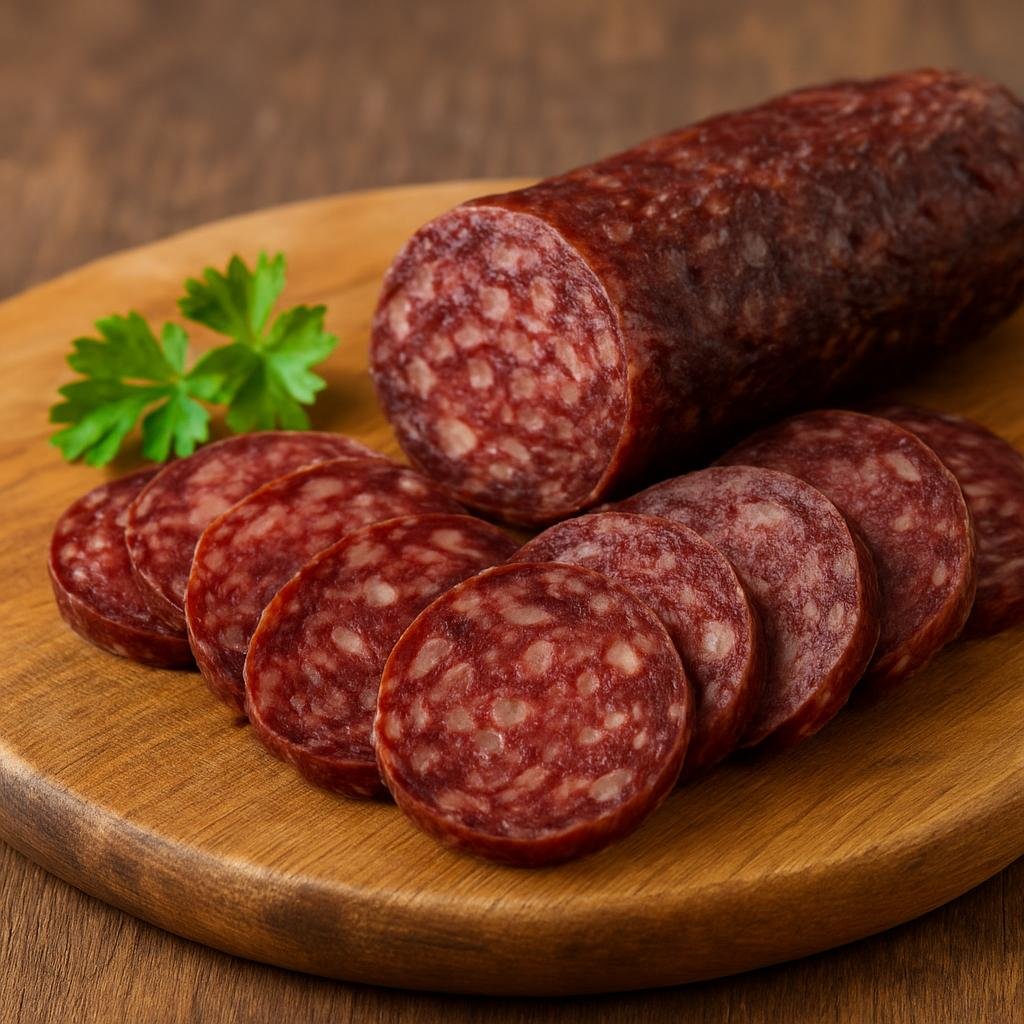
Ingredients
U.S. measurements first, metric equivalents in parentheses. Conversions are approximate; oz means weight ounces, not fluid ounces.
- 2 lb (900 g) pork shoulder, trimmed and partially chilled
- 1 lb (450 g) beef shoulder, trimmed and partially chilled
- 6 oz (170 g) pork fat (fatback), chilled and diced
- 2 tbsp (36 g) kosher salt
- 3/4 tsp (4 g) Prague powder #2 (curing salt) — use only if drying for more than two weeks
- 1 tsp (4 g) granulated sugar
- 1 tbsp (8 g) coarsely ground black pepper
- 1 tbsp (7 g) toasted cumin seeds, coarsely ground
- 1 tsp (2 g) smoked paprika or sweet paprika (optional)
- 2 tbsp (30 ml) dry red wine
- 1 clove garlic, minced, about 0.18 oz (5 g)
- Natural hog casing, length to fit a 10–12 oz (280–340 g) log, soaked and rinsed
- Dried bay leaf or paper for tying lengths (no measurement)
Show original ingredient measurements
- 2 lb (900 g) pork shoulder, trimmed and partially chilled
- 1 lb (450 g) beef shoulder, trimmed and partially chilled
- 6 oz (170 g) pork fat (fatback), chilled and diced
- 2 tbsp (36 g) kosher salt
- 3/4 tsp (4 g) Prague powder #2 (curing salt) — use only if drying for more than two weeks
- 1 tsp (4 g) granulated sugar
- 1 tbsp (8 g) coarsely ground black pepper
- 1 tbsp (7 g) toasted cumin seeds, coarsely ground
- 1 tsp (2 g) smoked paprika or sweet paprika (optional)
- 2 tbsp (30 ml) dry red wine
- 1 clove garlic, minced, about 5 g
- Natural hog casing, length to fit a 10–12 oz (280–340 g) log, soaked and rinsed
- Dried bay leaf or paper for tying lengths (no measurement)
Instructions
U.S. measurements first, metric equivalents in parentheses. Conversions are approximate.
1. Grind and season the meat: keep meat and fat well chilled. Cut pork, beef, and fat into 1–2 inch (2.54 to 5.08 cm) pieces and grind through a coarse plate (about 0.236 to 0.315 in (6–8 mm)). In a large bowl combine ground meats with salt, curing salt if using, sugar, ground pepper, ground toasted cumin, paprika, minced garlic, and red wine. Mix thoroughly by hand until the mixture is sticky and holds together — this develops protein binding; refrigerate the mixture for 12–24 hours to allow flavors to meld.
2. Stuff, press, ferment, and dry: pack the mixture tightly into the prepared hog casing to form a 10–12 oz (280–340 g) flattened log, tie both ends securely and roll the log in a cloth or place inside a mold to press gently. Leave at warm room temperature (68–75°F / 20–24°C) for 24–48 hours for initial fermentation (monitor for sour aroma but not rot). Then transfer to a cool, well-ventilated curing space at 50–55°F (10–13°C) with 75–85% humidity and hang or place under light weight to press further; dry for 3–6 weeks until the lukanka is firm to the touch and has lost approximately 30–40% weight. Slice thinly and serve at room temperature with fresh bread, cheese, and pickles.
Show original instructions
1. Grind and season the meat: keep meat and fat well chilled. Cut pork, beef, and fat into 1–2 inch pieces and grind through a coarse plate (about 6–8 mm). In a large bowl combine ground meats with salt, curing salt if using, sugar, ground pepper, ground toasted cumin, paprika, minced garlic, and red wine. Mix thoroughly by hand until the mixture is sticky and holds together — this develops protein binding; refrigerate the mixture for 12–24 hours to allow flavors to meld.
2. Stuff, press, ferment, and dry: pack the mixture tightly into the prepared hog casing to form a 10–12 oz (280–340 g) flattened log, tie both ends securely and roll the log in a cloth or place inside a mold to press gently. Leave at warm room temperature (68–75°F / 20–24°C) for 24–48 hours for initial fermentation (monitor for sour aroma but not rot). Then transfer to a cool, well-ventilated curing space at 50–55°F (10–13°C) with 75–85% humidity and hang or place under light weight to press further; dry for 3–6 weeks until the lukanka is firm to the touch and has lost approximately 30–40% weight. Slice thinly and serve at room temperature with fresh bread, cheese, and pickles.
Per serving | Servings: 8
Generated: 2026-11-06T05:33:28+00:00
*Values are estimates based on USDA data and mathematical calculations. Actual values may vary. Where data are unavailable, those contributions are excluded. Calories, Carbohydrates, Protein, Fat, Saturated fat, Cholesterol, Fiber, Sugar, Sodium, Potassium, Calcium, Iron, Vitamin A, Vitamin C and Vitamin D are known subtotals. Missing contributions are unknown, not zero.