Entree: India – Bengal – সরষে ইলিশ ➤ Shorshe Ilish (Hilsa fish simmered in a sharp mustard-and-poppy seed sauce characteristic of Bengali cuisine)
Food safety reminder: Follow safe food-handling practices and use a food thermometer to verify safe internal cooking temperatures.
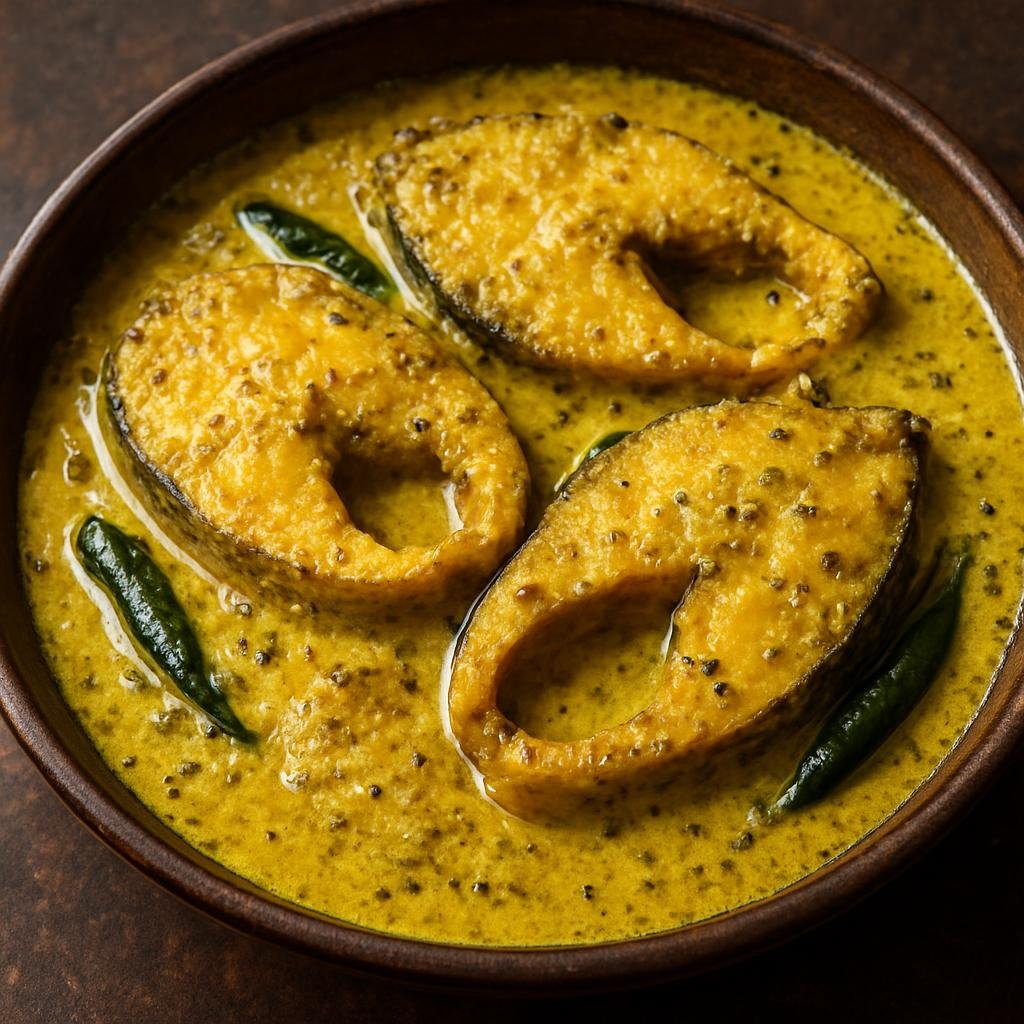
Ingredients
U.S. measurements first, metric equivalents in parentheses. Conversions are approximate; oz means weight ounces, not fluid ounces.
4 hilsa (ilish) steaks, 1 lb 8 oz (680 g) gross total (6 oz (170 g) each); for a catalog estimate, use raw shad as an explicitly approximate species proxy. Estimated edible raw fish: 1 lb 3/4 oz (476 g), assuming 70% edible yield after bones.
Mustard oil, 3 tbsp (45 ml), plus 1 to 2 tbsp (15–30 ml) for optional tempering (4 to 5 tbsp (60–75 ml) total if used).
Yellow mustard seeds, 11/16 oz (20 g).
White poppy seeds (posto), 5/16 oz (9 g).
2 green chilies, slit, approximately 11/16 oz (20 g) edible weight.
Turmeric powder, 0.035 oz (1 g) total.
Salt, 0.18 oz (5 g) total, or to taste.
Sugar, 0.035 oz (1 g), optional.
Water for loosening paste, 2 tbsp (30 ml).
Nigella seeds (kalonji), 0.088 oz (2.5 g), optional tempering; use this option for a consistent estimate.
Lemon juice, 1/2 tsp (2.5 ml), optional.
Show original ingredient measurements
4 hilsa (ilish) steaks, 680 g gross total (170 g each); for a catalog estimate, use raw shad as an explicitly approximate species proxy. Estimated edible raw fish: 476 g, assuming 70% edible yield after bones.
Mustard oil, 45 ml, plus 15–30 ml for optional tempering (60–75 ml total if used).
Yellow mustard seeds, 20 g.
White poppy seeds (posto), 9 g.
2 green chilies, slit, approximately 20 g edible weight.
Turmeric powder, 1 g total.
Salt, 5 g total, or to taste.
Sugar, 1 g, optional.
Water for loosening paste, 30 ml.
Nigella seeds (kalonji), 2.5 g, optional tempering; use this option for a consistent estimate.
Lemon juice, 2.5 ml, optional.
Instructions
U.S. measurements first, metric equivalents in parentheses. Conversions are approximate.
1. Soak the mustard and poppy seeds in 2 tbsp (30 ml) warm water for 10–15 minutes. Drain, then grind them with the slit green chilies and turmeric into a coarse paste. Add the listed 2 tbsp (30 ml) water as needed to make the paste spreadable. Stir in the salt and, if using, the sugar.
2. Pat the hilsa steaks dry. Season with a pinch of the listed salt and some of the turmeric, then rest for 5 minutes. Heat 2 to 3 tbsp (30–45 ml) mustard oil in a wide skillet until hot but not smoking. Stir a few drops of the hot oil into the paste, then coat the fish with the paste.
3. Arrange the coated steaks in the skillet in a single layer. Add 4 tbsp (60 ml) water, cover, and simmer gently over low heat for 8–12 minutes, turning once carefully, until the fish is just cooked through and the sauce has thickened.
4. For optional tempering, heat 1 tbsp (15 ml) mustard oil in a small pan until smoking, remove it from the heat, and pour it over the fish. Finish with the optional lemon juice and adjust salt to taste. Serve hot with steamed rice.
Show original instructions
1. Soak the mustard and poppy seeds in 30 ml warm water for 10–15 minutes. Drain, then grind them with the slit green chilies and turmeric into a coarse paste. Add the listed 30 ml water as needed to make the paste spreadable. Stir in the salt and, if using, the sugar.
2. Pat the hilsa steaks dry. Season with a pinch of the listed salt and some of the turmeric, then rest for 5 minutes. Heat 30–45 ml mustard oil in a wide skillet until hot but not smoking. Stir a few drops of the hot oil into the paste, then coat the fish with the paste.
3. Arrange the coated steaks in the skillet in a single layer. Add 60 ml water, cover, and simmer gently over low heat for 8–12 minutes, turning once carefully, until the fish is just cooked through and the sauce has thickened.
4. For optional tempering, heat 15 ml mustard oil in a small pan until smoking, remove it from the heat, and pour it over the fish. Finish with the optional lemon juice and adjust salt to taste. Serve hot with steamed rice.
Per serving | Servings: 4
Generated: 2026-11-06T06:54:45+00:00
*Values are estimates based on USDA data and mathematical calculations. Actual values may vary. Where data are unavailable, those contributions are excluded. Calories, Carbohydrates, Protein, Fat, Saturated fat, Fiber, Sodium, Potassium, Calcium, Iron, Vitamin A and Vitamin C are known subtotals. Missing contributions are unknown, not zero.