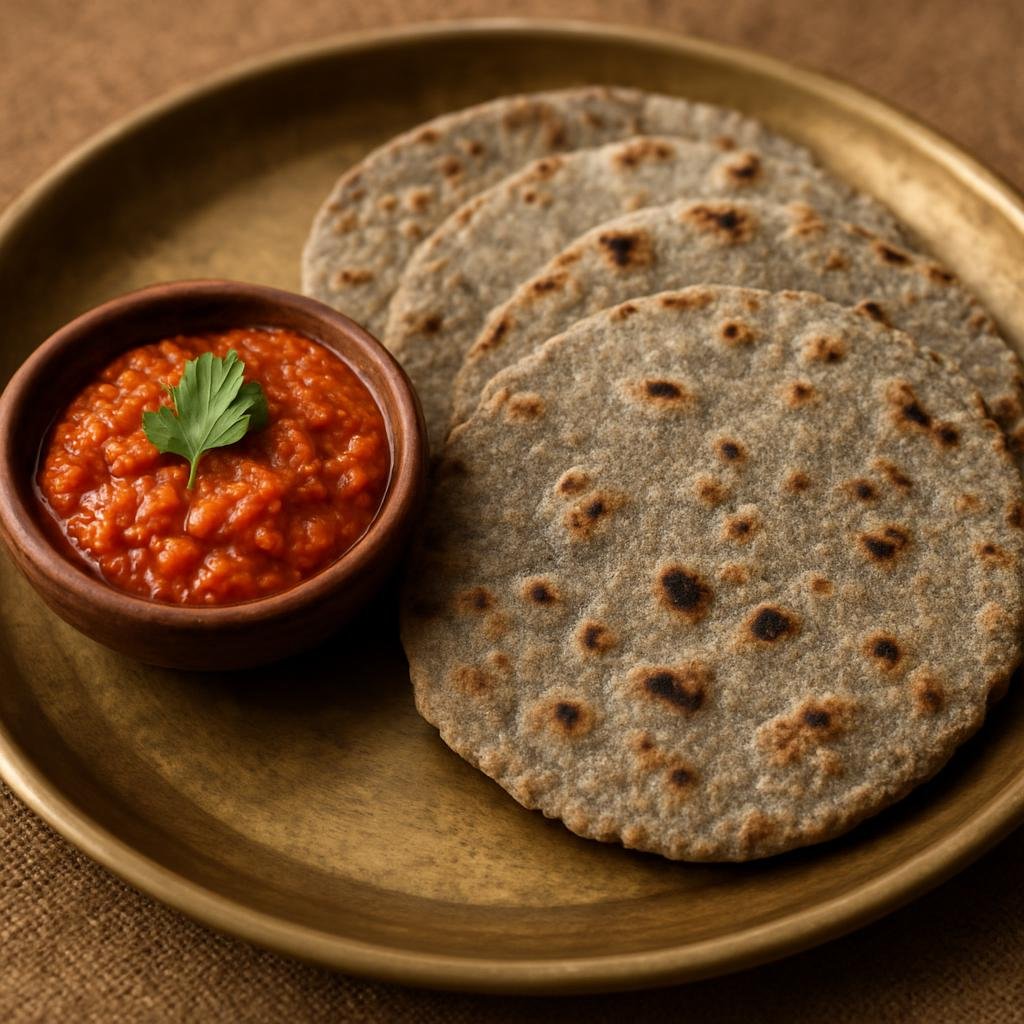
Entree: India – Rajasthan – बाजरे की रोटी और लहसुन की चटनी ➤ Bajre ki Roti aur Lahsun ki Chutney (Pearl millet flatbreads served with a pungent garlic chutney)
Food safety reminder: Follow safe food-handling practices and use a food thermometer to verify safe internal cooking temperatures.
Ingredients
U.S. measurements first, metric equivalents in parentheses. Conversions are approximate; oz means weight ounces, not fluid ounces.
- 2 cups (240 g) bajra (pearl millet) flour
- 1 1/4 cups (300 ml) hot water, plus more as needed
- 1 tsp (6 g) salt
- 3 tbsp (45 ml) ghee or clarified butter, divided
- Extra dry flour for dusting, as needed

Lehsun (garlic) chutney:
- 10 cloves garlic (about 1 1/16 oz (30 g)), peeled and lightly roasted
- 2 green chilies (about 0.35 oz (10 g)), or to taste
- 1/4 cup (15 g) fresh cilantro leaves
- 2 tbsp (30 ml) fresh lemon juice
- 2 tbsp (30 ml) mustard oil or neutral oil
- 1/2 tsp (1 g) roasted cumin powder
- 1 tsp (6 g) salt, or to taste
- 1–2 tbsp (15–30 ml) water to adjust consistency
Show original ingredient measurements
- 2 cups (240 g) bajra (pearl millet) flour
- 1 1/4 cups (300 ml) hot water, plus more as needed
- 1 tsp (6 g) salt
- 3 tbsp (45 ml) ghee or clarified butter, divided
- Extra dry flour for dusting, as needed

Lehsun (garlic) chutney:
- 10 cloves garlic (about 30 g), peeled and lightly roasted
- 2 green chilies (about 10 g), or to taste
- 1/4 cup (15 g) fresh cilantro leaves
- 2 tbsp (30 ml) fresh lemon juice
- 2 tbsp (30 ml) mustard oil or neutral oil
- 1/2 tsp (1 g) roasted cumin powder
- 1 tsp (6 g) salt, or to taste
- 1–2 tbsp (15–30 ml) water to adjust consistency
Instructions
U.S. measurements first, metric equivalents in parentheses. Conversions are approximate.
1. In a large bowl combine the bajra flour and salt. Add the hot water gradually and mix with a spoon until the dough comes together; it will be slightly crumbly but should hold when pressed. Let rest, covered, for 10 minutes.
2. Divide the dough into 8 equal portions. On a clean cloth or board dusted with dry bajra flour, press each portion into a flat disc about 5–6 inches (12.7 to 15.2 cm) wide using your palms and the cloth (bajra dough is rustic and fragile; you may pat rather than roll).
3. Heat a heavy griddle or cast-iron skillet over medium-high heat. Place a roti on the hot griddle and cook 1–2 minutes until brown spots appear, flipping and applying a little ghee to each side; cook until both sides are cooked through and slightly puffed. Repeat with remaining rotis, keeping them wrapped in a cloth to stay warm.
4. Meanwhile, prepare the lehsun chutney: in a blender combine roasted garlic, green chilies, cilantro, lemon juice, roasted cumin, salt, and oil. Pulse to a coarse paste, adding 1–2 tbsp (15–30 ml) water to achieve a spreadable consistency. Adjust salt and lemon to taste.
5. Serve rotis hot, spread or dip with the garlic chutney and finish with a drizzle of ghee if desired.
Show original instructions
1. In a large bowl combine the bajra flour and salt. Add the hot water gradually and mix with a spoon until the dough comes together; it will be slightly crumbly but should hold when pressed. Let rest, covered, for 10 minutes.
2. Divide the dough into 8 equal portions. On a clean cloth or board dusted with dry bajra flour, press each portion into a flat disc about 5–6 inches wide using your palms and the cloth (bajra dough is rustic and fragile; you may pat rather than roll).
3. Heat a heavy griddle or cast-iron skillet over medium-high heat. Place a roti on the hot griddle and cook 1–2 minutes until brown spots appear, flipping and applying a little ghee to each side; cook until both sides are cooked through and slightly puffed. Repeat with remaining rotis, keeping them wrapped in a cloth to stay warm.
4. Meanwhile, prepare the lehsun chutney: in a blender combine roasted garlic, green chilies, cilantro, lemon juice, roasted cumin, salt, and oil. Pulse to a coarse paste, adding 1–2 tbsp (15–30 ml) water to achieve a spreadable consistency. Adjust salt and lemon to taste.
5. Serve rotis hot, spread or dip with the garlic chutney and finish with a drizzle of ghee if desired.
Per serving | Servings: 4
Generated: 2026-11-05T19:50:48+00:00
*Values are estimates based on USDA data and mathematical calculations. Actual values may vary. Where data are unavailable, those contributions are excluded. Calories, Carbohydrates, Protein, Fat, Saturated fat, Fiber, Sodium, Potassium, Calcium, Iron, Vitamin A and Vitamin C are known subtotals. Missing contributions are unknown, not zero.