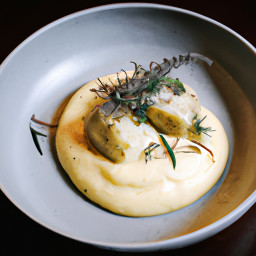
Creamy Porcini Polenta with Juniper-Rosemary Butter
Food safety reminder: Follow safe food-handling practices and use a food thermometer to verify safe internal cooking temperatures.
Ingredients
U.S. measurements first, metric equivalents in parentheses. Conversions are approximate; oz means weight ounces, not fluid ounces.
1 oz (28 g) dried porcini mushrooms
1 cup (240 ml) boiling water (for soaking)
3 cups (720 ml) low-sodium vegetable stock
1 cup (240 ml) whole milk
1 cup (160 g) coarse polenta (not instant cornmeal)
1 tbsp (15 ml) olive oil
1 small shallot, minced
3 tbsp (45 g) unsalted butter, softened
2 tbsp (30 g) unsalted butter
1/2 cup (50 g) finely grated Parmesan cheese
Kosher salt to taste
Freshly ground black pepper to taste
1 tsp (5 ml) juniper berries, lightly crushed
1 tsp (5 ml) fresh rosemary, finely chopped
1/2 tsp (2.5 ml) lemon zest
Pinch flaky sea salt
Show original ingredient measurements
1 oz (28 g) dried porcini mushrooms
1 cup (240 ml) boiling water (for soaking)
3 cups (720 ml) low-sodium vegetable stock
1 cup (240 ml) whole milk
1 cup (160 g) coarse polenta (not instant cornmeal)
1 tbsp (15 ml) olive oil
1 small shallot, minced
3 tbsp (45 g) unsalted butter, softened
2 tbsp (30 g) unsalted butter
1/2 cup (50 g) finely grated Parmesan cheese
Kosher salt to taste
Freshly ground black pepper to taste
1 tsp juniper berries, lightly crushed
1 tsp fresh rosemary, finely chopped
1/2 tsp lemon zest
Pinch flaky sea salt
Instructions
U.S. measurements first, metric equivalents in parentheses. Conversions are approximate.
1. In a small bowl, mash together the softened butter, crushed juniper, rosemary, lemon zest, and a pinch of flaky sea salt; form into a small log, wrap, and chill until needed.
2. Place porcini in a heatproof bowl, cover with the boiling water, and soak 15 minutes. Lift mushrooms out; strain the soaking liquid through a fine sieve or coffee filter to remove grit and reserve. Chop the mushrooms.
3. In a medium saucepan, heat olive oil over medium heat. Add shallot and cook until translucent, 2–3 minutes. Stir in chopped porcini and cook 1 minute.
4. Pour in the stock, milk, and reserved porcini soaking liquid; bring just to a simmer and season lightly with salt.
5. While whisking, slowly rain in the polenta. Reduce heat to low and cook, stirring frequently, until very creamy and tender, 25–35 minutes. If it thickens too quickly, add a splash of hot water.
6. Stir in 2 tablespoons (30 ml) unsalted butter and the Parmesan; season to taste with salt and freshly ground black pepper.
7. Spoon the polenta onto a warm platter or plates. Top with thin slices or small dollops of the juniper-rosemary butter so it melts over the surface.
8. Serve immediately alongside the grilled venison steaks, finishing with a grind of black pepper to tie the flavors together.
Show original instructions
1. In a small bowl, mash together the softened butter, crushed juniper, rosemary, lemon zest, and a pinch of flaky sea salt; form into a small log, wrap, and chill until needed.
2. Place porcini in a heatproof bowl, cover with the boiling water, and soak 15 minutes. Lift mushrooms out; strain the soaking liquid through a fine sieve or coffee filter to remove grit and reserve. Chop the mushrooms.
3. In a medium saucepan, heat olive oil over medium heat. Add shallot and cook until translucent, 2–3 minutes. Stir in chopped porcini and cook 1 minute.
4. Pour in the stock, milk, and reserved porcini soaking liquid; bring just to a simmer and season lightly with salt.
5. While whisking, slowly rain in the polenta. Reduce heat to low and cook, stirring frequently, until very creamy and tender, 25–35 minutes. If it thickens too quickly, add a splash of hot water.
6. Stir in 2 tablespoons unsalted butter and the Parmesan; season to taste with salt and freshly ground black pepper.
7. Spoon the polenta onto a warm platter or plates. Top with thin slices or small dollops of the juniper-rosemary butter so it melts over the surface.
8. Serve immediately alongside the grilled venison steaks, finishing with a grind of black pepper to tie the flavors together.
Per serving | Servings: 4
Generated: 2026-11-05T22:08:19+00:00
*Values are estimates based on USDA data and mathematical calculations. Actual values may vary. Where data are unavailable, those contributions are excluded. Calories, Carbohydrates, Protein, Fat, Saturated fat, Cholesterol, Fiber, Sodium, Potassium, Calcium, Iron, Vitamin A, Vitamin C and Vitamin D are known subtotals. Missing contributions are unknown, not zero.