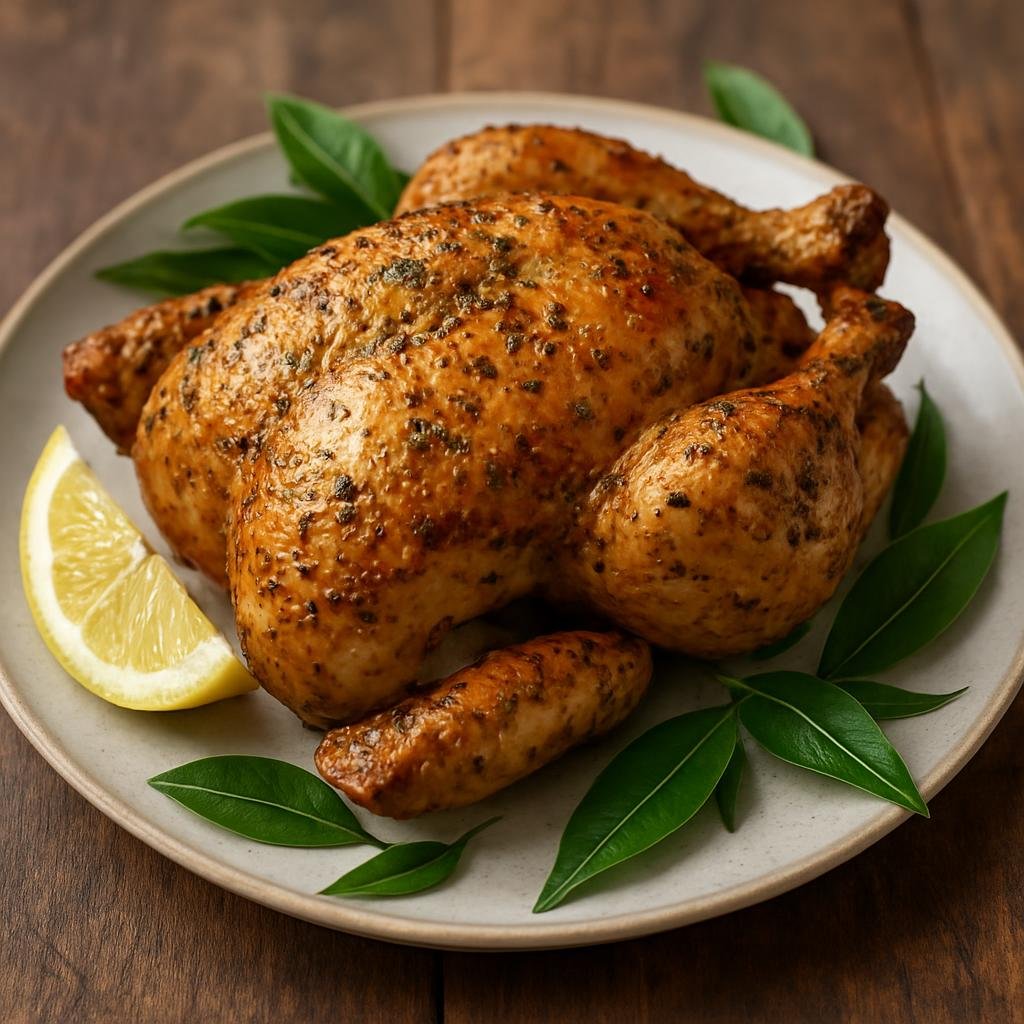
Entree: Australia – Queensland Coast – Lemon Myrtle Chicken (Roast or pan-roasted chicken seasoned with lemon myrtle, an Australian native citrus-scented herb)
Food safety reminder: Follow safe food-handling practices and use a food thermometer to verify safe internal cooking temperatures.
Serving Size: 4
Approximate Time
Prep
10 min
Cook
40 min
Additional
30 min
Total
1 hr 10 min
Ingredients
- 4 bone-in, skin-on chicken thighs, approx. 6–8 oz (170–225 g) each
- 2 tbsp (30 ml) olive oil
- 1 tbsp (3 g) ground lemon myrtle or 2 tbsp (6 g) finely chopped fresh lemon myrtle leaves
- 2 cloves garlic, minced
- 1 tsp (5 g) kosher salt
- 1/2 tsp (1 g) freshly ground black pepper
- 1 tbsp (15 ml) fresh lemon juice
- 1 tsp (2 g) lemon zest (optional)
- 1 tbsp (15 ml) honey
- 1 tbsp (15 ml) unsalted butter
- 1/4 cup (60 ml) chicken stock or dry white wine
- 2 sprigs fresh thyme or 1 tsp (1 g) dried thyme
- Fresh parsley for garnish
Instructions
1. In a bowl combine the olive oil, ground lemon myrtle (or chopped fresh leaves), minced garlic, lemon juice, lemon zest if using, honey, salt and pepper to make a marinade. Rub the mixture all over the chicken thighs, cover and refrigerate for 30 minutes to 4 hours.
2. Preheat the oven to 400°F (200°C). Heat an ovenproof skillet over medium-high heat. Add a little oil if the pan is dry and place chicken thighs skin-side down, searing until the skin is deep golden and crisp, 5–7 minutes. Turn the thighs and sear the other side 2 minutes.
3. Add the thyme and pour the chicken stock or wine into the pan, then transfer the skillet to the preheated oven. Roast until an instant-read thermometer inserted into the thickest part of the thigh reads 165°F (74°C), about 20–30 minutes more depending on size.
4. Remove the chicken to a plate and place the skillet over medium heat on the stovetop. Stir in the butter and reduce the pan juices slightly to form a glossy sauce, scraping up browned bits. Spoon the sauce over the chicken, garnish with fresh parsley and serve with roasted vegetables or a simple green salad.
Estimated Nutritional Information*
Per serving | Servings: 4
Calories: 416 kcal
Carbohydrates: 6.3 g
Protein: 23.4 g
Fat: 32.8 g
Saturated fat: 9 g
Cholesterol: 144 mg
Fiber: 0.2 g
Sodium: 619 mg
Potassium: 318 mg
Calcium: 18 mg
Iron: 1.14 mg
Vitamin A: 57 µg RAE
Vitamin C: 3.4 mg
Vitamin D: 0.1 µg
Nutrition estimated: November 5, 2026
*Values are estimates based on USDA data and mathematical calculations. Actual values may vary. Where data are unavailable, those contributions are excluded. Calories, Carbohydrates, Protein, Fat, Saturated fat, Cholesterol, Fiber, Sodium, Potassium, Calcium, Iron, Vitamin A, Vitamin C and Vitamin D are known subtotals. Missing contributions are unknown, not zero.