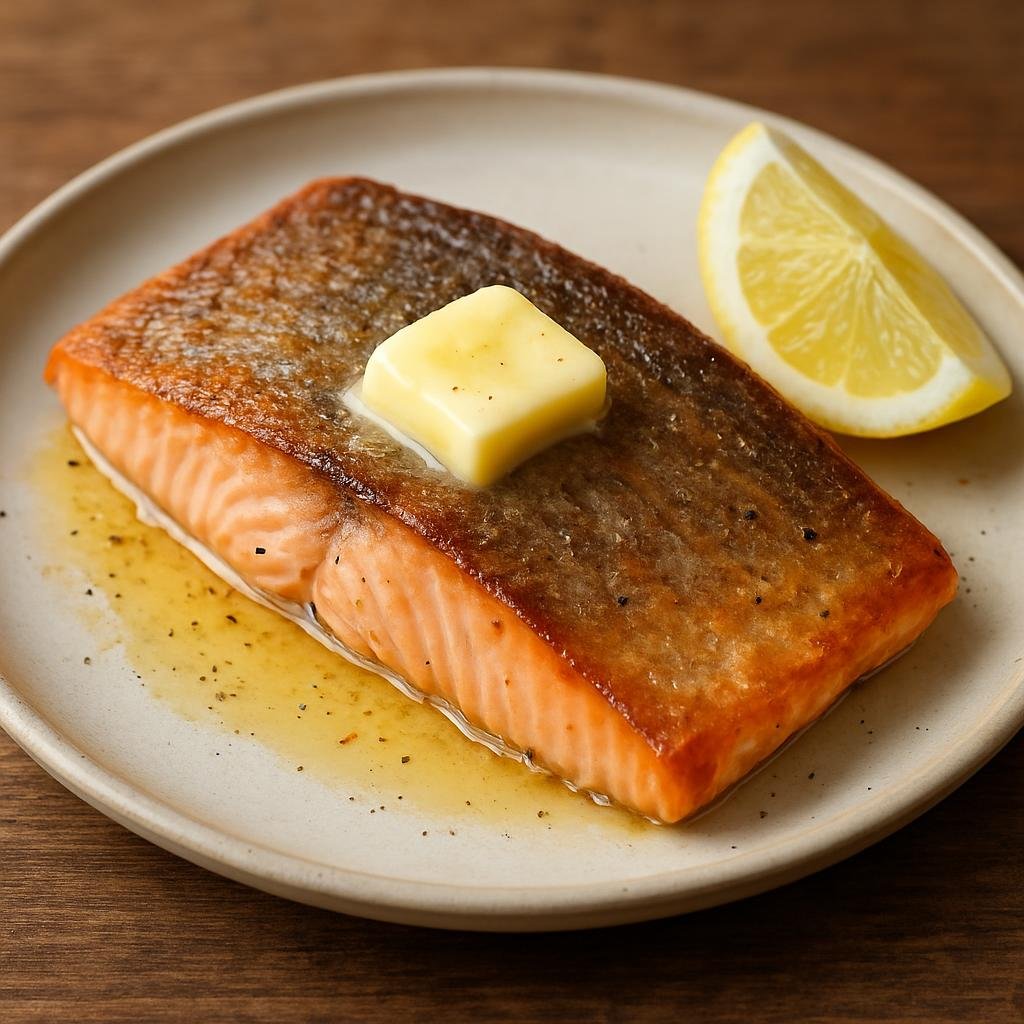
Entree: Canada – Northern Canada – Arctic Char Fillet (Pan-seared or roasted fillet of cold-water Arctic char, simply seasoned and finished with butter and lemon)
Food safety reminder: Follow safe food-handling practices and use a food thermometer to verify safe internal cooking temperatures.
Serving Size: 4
Approximate Time
Prep
10 min
Cook
10 min
Additional
2 min
Total
25 min
Ingredients
U.S. measurements first, metric equivalents in parentheses. Conversions are approximate; oz means weight ounces, not fluid ounces.
- 4 Arctic char fillets, approx. 6 oz (170 g) each
- 2 tbsp (30 ml) olive oil
- 2 tbsp (30 g) unsalted butter
- 1 tbsp (15 g) capers, drained
- 1 lemon, juiced (about 2 tbsp (30 ml)) plus wedges for serving
- 2 cloves (0.21 oz (6 g)) garlic, minced
- 2 tbsp (8 g) fresh dill, chopped
- 1/2 tsp (2 g) flaky sea salt, or to taste
- 1/4 tsp (1 g) freshly ground black pepper, or to taste
- 1/8 tsp (0.5 g) smoked paprika (optional)
Show original ingredient measurements
- 4 Arctic char fillets, approx. 6 oz (170 g) each
- 2 tbsp (30 ml) olive oil
- 2 tbsp (30 g) unsalted butter
- 1 tbsp (15 g) capers, drained
- 1 lemon, juiced (about 2 tbsp / 30 ml) plus wedges for serving
- 2 cloves (6 g) garlic, minced
- 2 tbsp (8 g) fresh dill, chopped
- 1/2 tsp (2 g) flaky sea salt, or to taste
- 1/4 tsp (1 g) freshly ground black pepper, or to taste
- 1/8 tsp (0.5 g) smoked paprika (optional)
Instructions
1. Pat the fillets dry with paper towels and season both sides with salt, pepper, and smoked paprika if using.
2. Heat a large ovenproof skillet over medium-high heat and add the olive oil. When shimmering, place the fillets skin-side down and press gently for 20 seconds to prevent curling.
3. Sear skin-side down 3–4 minutes until the skin is crisp and golden. Flip the fillets and add the butter and minced garlic to the pan.
4. Spoon the melted butter over the fillets for 1 minute, then transfer the skillet to a preheated 400°F (200°C) oven and roast 4–6 minutes, until the fillets reach 125–130°F (52–55°C) for medium-rare to medium doneness.
5. Remove from oven, transfer fillets to a plate, and let rest 2 minutes. Stir the capers, lemon juice, and chopped dill into the pan juices and spoon over the fish.
6. Serve immediately with lemon wedges and extra dill.
Estimated Nutritional Information*
Per serving | Servings: 4
Calories: 120 kcal
Carbohydrates: 1.6 g
Protein: 0.4 g
Fat: 12.9 g
Saturated fat: 4.7 g
Cholesterol: 16 mg
Fiber: 0.3 g
Sodium: 284 mg
Potassium: 38 mg
Calcium: 12 mg
Iron: 0.32 mg
Vitamin A: 62 µg RAE
Vitamin C: 5.3 mg
Generated: 2026-11-05T19:53:32+00:00
*Values are estimates based on USDA data and mathematical calculations. Actual values may vary. Where data are unavailable, those contributions are excluded. Calories, Carbohydrates, Protein, Fat, Saturated fat, Cholesterol, Fiber, Sodium, Potassium, Calcium, Iron, Vitamin A and Vitamin C are known subtotals. Missing contributions are unknown, not zero.